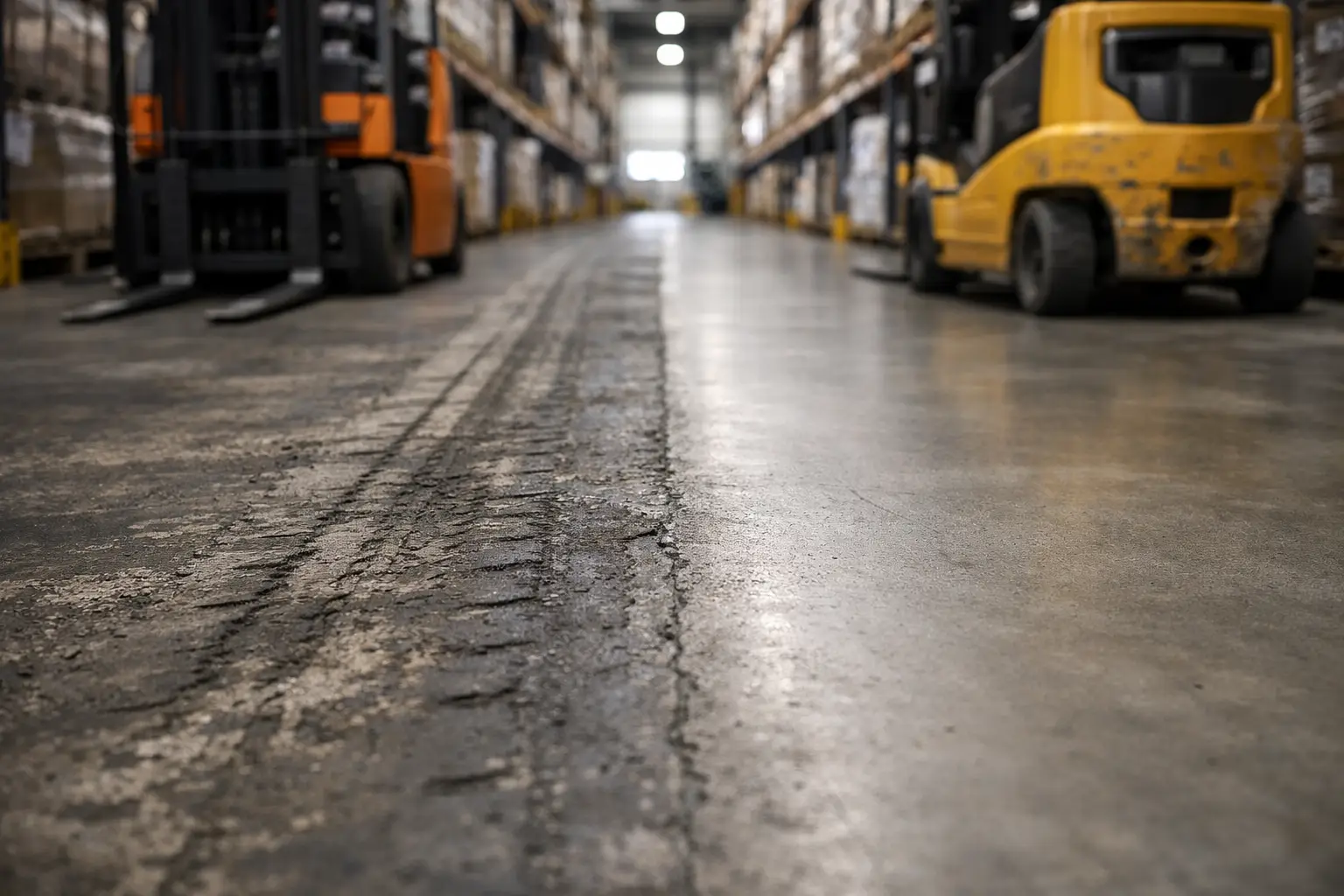
Forklift aisles rarely fail across their full width at the same rate. A facility may see polished wheel tracks, rutted travel lanes, broken joint edges, coating loss, or concrete spalling in precise bands while adjacent floor remains serviceable. Why do forklift aisles wear unevenly? Because repeated vehicle movement concentrates force in predictable locations, and minor variations in slab condition, joints, wheels, loading, and traffic behavior amplify that force over time.
For operations leaders, uneven wear is not a cosmetic issue. It affects forklift stability, load security, tire life, housekeeping, drainage, and maintenance planning. In very narrow aisle operations, it can also compromise the flatness conditions required for safe, efficient truck travel.
Why Forklift Aisles Wear Unevenly
The basic cause is concentrated repetition. Forklifts do not travel randomly across a floor. Operators follow the same routes, enter racks at similar angles, stop in the same locations, and turn within defined intersections. Every pass applies load through a relatively small tire contact area. Over thousands of cycles, the floor in those paths receives far more stress than the surrounding slab.
Wear becomes uneven when the traffic pattern meets a floor condition that is already vulnerable. A sound concrete slab can still deteriorate quickly at unsupported joints, weak surface paste, repaired areas, transitions, or locations exposed to moisture and chemical attack. The wheel path identifies the stress. The underlying condition determines the type and speed of failure.
Fixed wheel paths concentrate abrasion
In narrow aisles, forklifts and reach trucks are guided by rack geometry. Their wheels repeatedly follow nearly identical lines. Hard wheels, especially polyurethane or loaded solid tires, can create high contact pressure that polishes concrete, removes weak surface material, and exposes aggregate along the wheel track.
Turning adds another level of stress. Drive wheels scrub laterally during turns, particularly at aisle ends, dock approaches, staging areas, and battery charging zones. This scrubbing can strip coatings, abrade concrete, and create visible arcs or patches of accelerated wear. A straight travel aisle may show gradual wheel-track wear while a turning zone fails much faster.
Joints are often the first point of failure
Construction and control joints interrupt the slab. When a forklift crosses a joint, the wheel load transfers from one slab panel to another. If the joint edges are unsupported, damaged, or uneven, each crossing creates impact. That impact breaks down the concrete arris, widens the joint, and allows further movement.
Joint failure is often uneven because traffic crosses only part of a joint repeatedly. One wheel line may hit a joint edge thousands of times per shift while another section receives limited loading. The result is localized spalling, rocking slabs, vibration, and progressively harsher forklift impact.
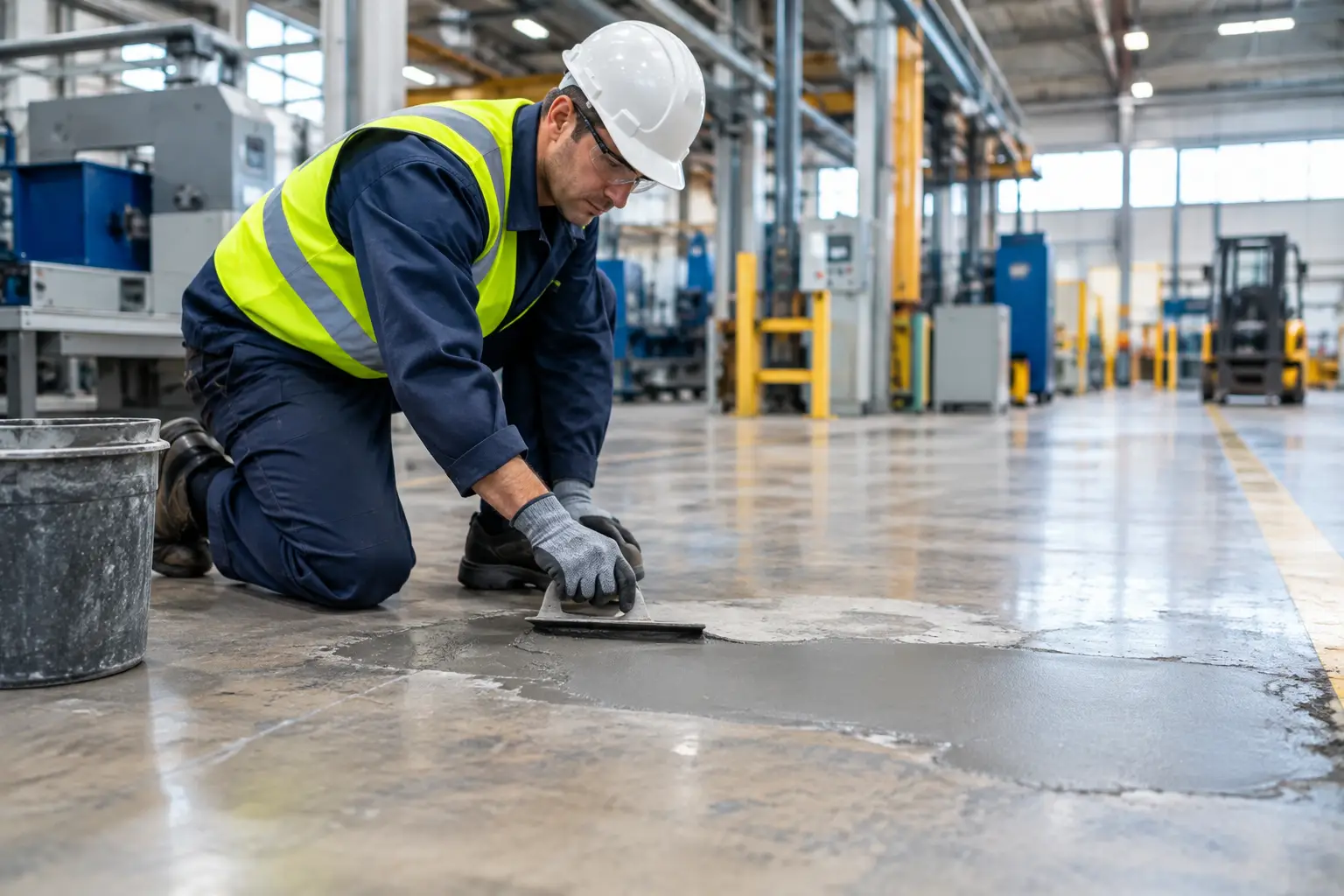
The problem is not solved by filling a damaged joint with a material that cannot carry the traffic demand. Industrial joint repair requires the right preparation, geometry, and load-bearing repair system. The repair must support the edge and tolerate the movement expected at that location.
Slab movement creates differential wear
Concrete slabs move. They shrink as they cure, respond to temperature changes, and may curl at joints when moisture and temperature differ between the top and bottom of the slab. Soil support, vapor conditions, and slab thickness also influence how the floor performs under traffic.
When adjacent slab panels are no longer level at a joint, forklift wheels strike a vertical displacement rather than rolling smoothly across a plane. Even a small elevation difference becomes significant under repeated loaded traffic. The higher edge can chip, the lower slab can settle further, and the forklift experiences increased vibration.
Localized settlement is another concern. If subbase support is inconsistent, a slab may deflect more in certain traffic lanes. The surface can then wear faster where wheel loads repeatedly flex the concrete or where water finds a path into cracks and joints.
Wheel Loads and Equipment Setup Matter
Forklift weight is only part of the equation. A loaded truck transfers force through its wheels, and the actual pressure at the floor depends on tire type, wheel size, load distribution, speed, and maneuvering behavior. Small, hard wheels can impose severe point loading. Reach trucks, order pickers, and turret trucks can be especially demanding in defined travel paths.
Load placement matters as well. A forklift carrying heavy loads at consistent heights or traveling with an unevenly distributed load may impose different forces across its wheel paths. Aggressive braking, rapid acceleration, and sharp steering increase shear forces at the floor surface.
Equipment changes can expose a problem that was not apparent under prior operating conditions. A slab performing adequately for pneumatic-tire forklifts may deteriorate quickly after a conversion to hard-tire electric equipment, higher rack loads, or more frequent shifts. Floor performance must be evaluated against current and planned traffic, not the conditions that existed when the slab was originally installed.
Surface Condition Determines How Wear Appears
Not all uneven aisle wear looks the same. Surface dusting and polishing typically point to abrasion or a weak wearing surface. Exposed aggregate and shallow pitting may indicate a surface that lacks abrasion resistance or has been weakened by moisture, poor curing, or chemical exposure.
Coating loss in wheel tracks can indicate that the system was not designed for the equipment, loading, or substrate condition. A thin coating may be suitable for light-duty exposure but not for continuous hard-wheel traffic. Adhesion failure may also reflect insufficient surface preparation, moisture vapor transmission, or contamination in the concrete.
Cracks, spalls, and broken joints point to a structural or movement-related condition, not merely a worn surface. Applying a new coating over active joint failure or unsupported slab edges does not correct the cause. It can conceal the problem temporarily while the impact damage continues below.
Diagnose the Cause Before Selecting a Repair
A durable floor upgrade begins with observation and measurement. The question is not simply where the floor is worn. The question is why that exact pattern exists.
Review the travel route, equipment types, axle and wheel configuration, load profiles, and daily traffic volume. Map visible wear against forklift wheel paths, turning areas, rack entrances, and joints. Check whether the damage is isolated to a particular shift, truck model, or operating practice.
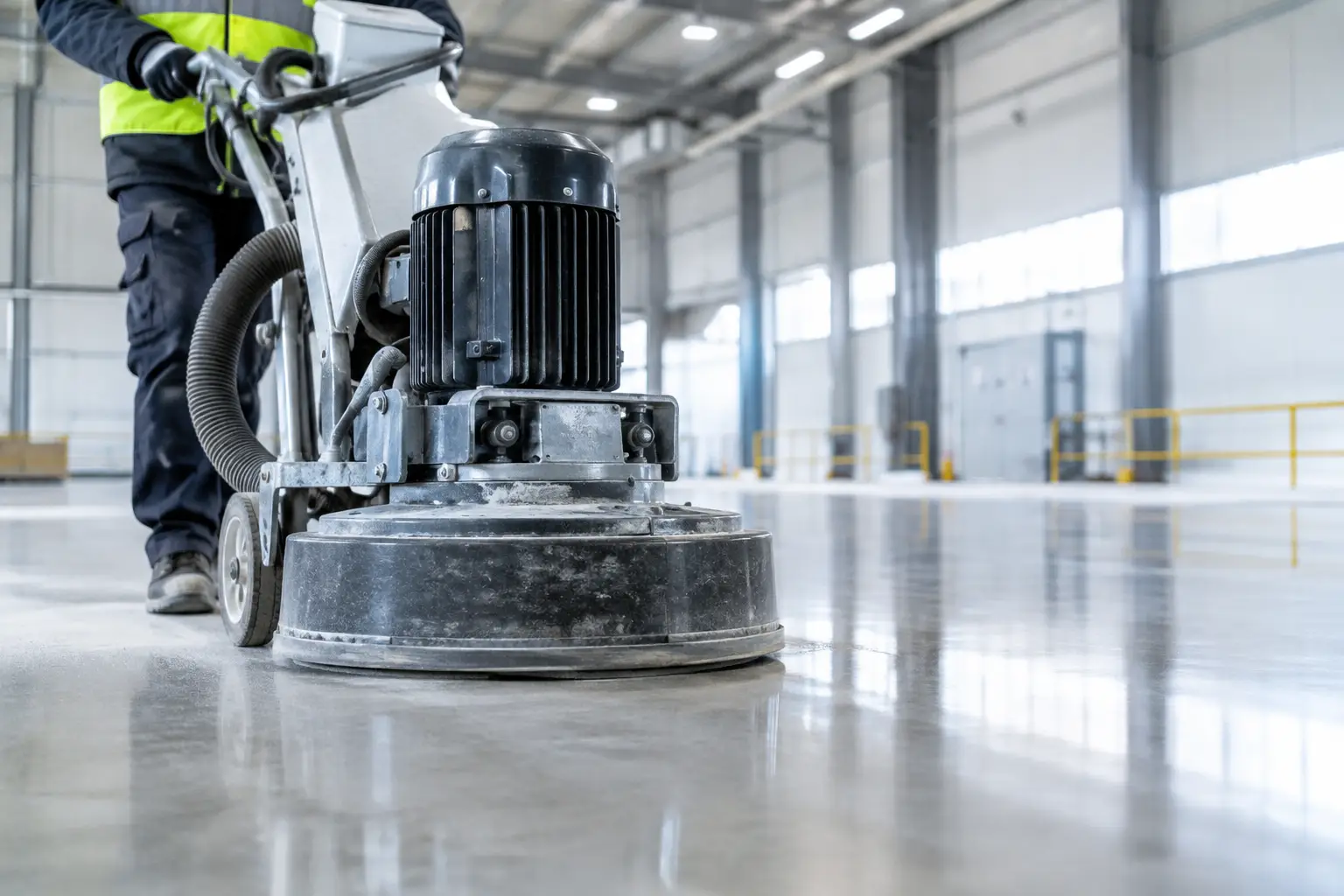
The floor itself should be assessed for joint condition, cracking, slab elevation differences, flatness, moisture exposure, surface strength, prior repairs, and contamination. Grinding or profiling can correct certain elevation transitions and remove damaged surface material, but it is not a substitute for stabilizing an unsupported joint or addressing active slab movement.
In VNA facilities, the evaluation must be more exact. Superflat floor tolerances are tied to the truck, guidance system, rack layout, and operating aisle. A worn or repaired aisle must maintain the required travel profile, not simply appear smooth. Wire-guided trucks add another consideration: repairs and floor upgrades must protect the wire guidance installation and maintain reliable vehicle tracking.
Match the Repair to the Failure Mechanism
The correct solution depends on the condition. Where joint edges are breaking under hard-wheel traffic, a properly engineered joint repair can restore edge support and reduce impact. Where slab panels have developed abrupt height differences, targeted grinding and floor correction may improve travel while related movement issues are addressed.
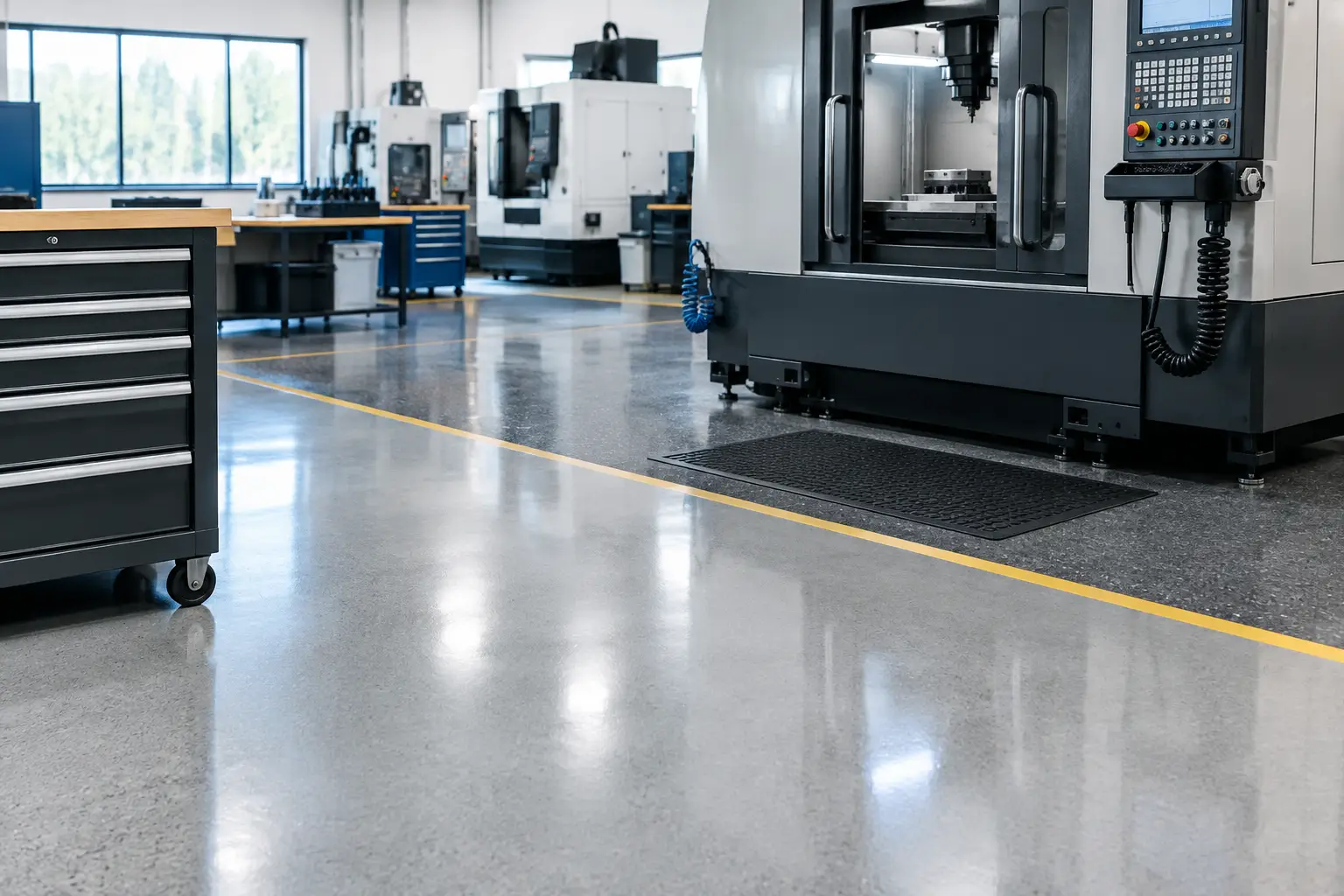
Where abrasion has removed the wearing surface, a floor upgrade may require mechanical preparation followed by a system designed for the operating environment. The appropriate material depends on traffic intensity, thermal exposure, chemicals, washdowns, cure-time limits, and whether the area requires a jointless floor. A jointless system can reduce cleaning traps and protect the surface in appropriate areas, but it does not eliminate structural joints that the slab needs to accommodate movement.
This is where specification discipline matters. A fast turnaround material may reduce downtime but may not be the best choice for every exposure. A harder system may improve abrasion resistance but need careful consideration where thermal cycling or substrate movement is significant. Performance comes from matching the system to the facility, then executing preparation and installation to the required standard.
Reduce Recurrence Through Traffic and Maintenance Control
Floor repair should be paired with practical operating controls. Maintain tires and wheels, because damaged wheels increase impact and concentrate loading. Confirm that forklifts are appropriate for the floor and duty cycle. Where feasible, adjust repetitive turning or staging patterns so one small area does not absorb all of the traffic.
Keep joints clean and inspect them before minor edge damage becomes a larger repair. Water, debris, and chemical residues accelerate deterioration once a joint or crack opens. Establishing regular inspections for high-traffic aisles, intersections, and rack entries makes repairs more predictable and less disruptive.
For mission-critical operations, schedule work around the actual traffic plan. The repair sequence, cure schedule, access controls, and return-to-service criteria should be established before crews arrive. A floor repair that meets material requirements but disrupts warehouse flow is not a complete project outcome.
Uneven forklift aisle wear is a record of how a facility operates. Read that record carefully, correct the underlying failure mechanism, and the floor can return to supporting safer movement, longer equipment life, and more reliable production.