A dropped fixture, a steady drip of cutting fluid, and a forklift turning at the same point every shift will expose a weak floor quickly. Machine shop flooring choices are not a finish-selection exercise. They are an operating decision that affects safety, equipment movement, cleaning effort, maintenance costs, and available production time.
The best system is rarely the one with the lowest installed price. It is the system specified for the actual loads, contaminants, substrate condition, and installation window in the facility. A floor that performs under real shop conditions protects the operation from avoidable repairs and disruptive shutdowns.
Start With the Demands of the Shop Floor
Machine shops place concentrated demands on concrete. CNC machines, lathes, presses, tool carts, forklifts, pallet jacks, and maintenance equipment create rolling and static loads that can damage weak coatings and failing joints. Metal chips and abrasive debris add wear. Oils, coolants, hydraulic fluids, and cleaning products test chemical resistance every day.
Before choosing a floor system, document how each area operates. A receiving aisle has different requirements than a machining cell. A welding area has different risks than a climate-controlled inspection room. Separating these conditions early prevents a single, generic flooring specification from becoming a long-term liability.
The condition of the existing slab also matters. Cracks, spalls, curling, moisture vapor, weak surface paste, and failed joint edges must be identified before a new system is selected. Coating over damaged concrete does not eliminate the underlying cause. It only delays the repair.
Machine Shop Flooring Choices by Performance Need
Several floor systems can perform well in a machine shop, but each has a specific role. The right choice depends on exposure, traffic, downtime tolerance, and the condition of the concrete beneath it.
Polished and Densified Concrete
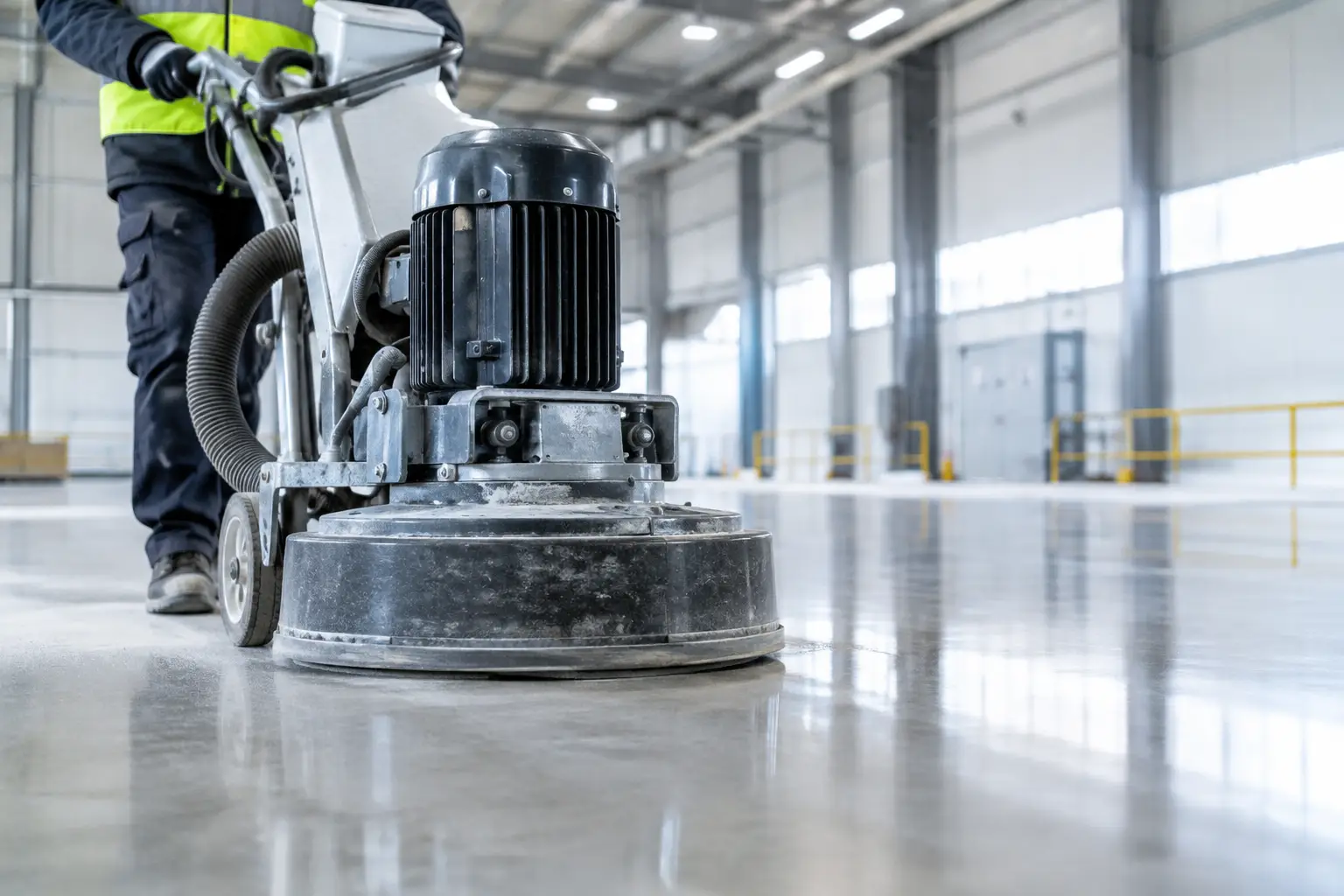
Mechanically ground and densified concrete is a practical option for dry machine shop areas with heavy wheel traffic. The process removes weak surface material, improves surface density, and can produce a flatter, easier-to-clean floor. It does not create a thick chemical barrier, so it is best suited to areas where coolant and oil exposure are controlled rather than constant.
Its advantages are durability, low dusting, and no coating layer to peel. Its limitations are equally clear: severe chemical exposure, aggressive washdown, and deep existing deterioration may require a more protective system. Slip resistance must also be evaluated against the actual contaminants present, not just the dry appearance of the finished floor.
Epoxy Resin Flooring
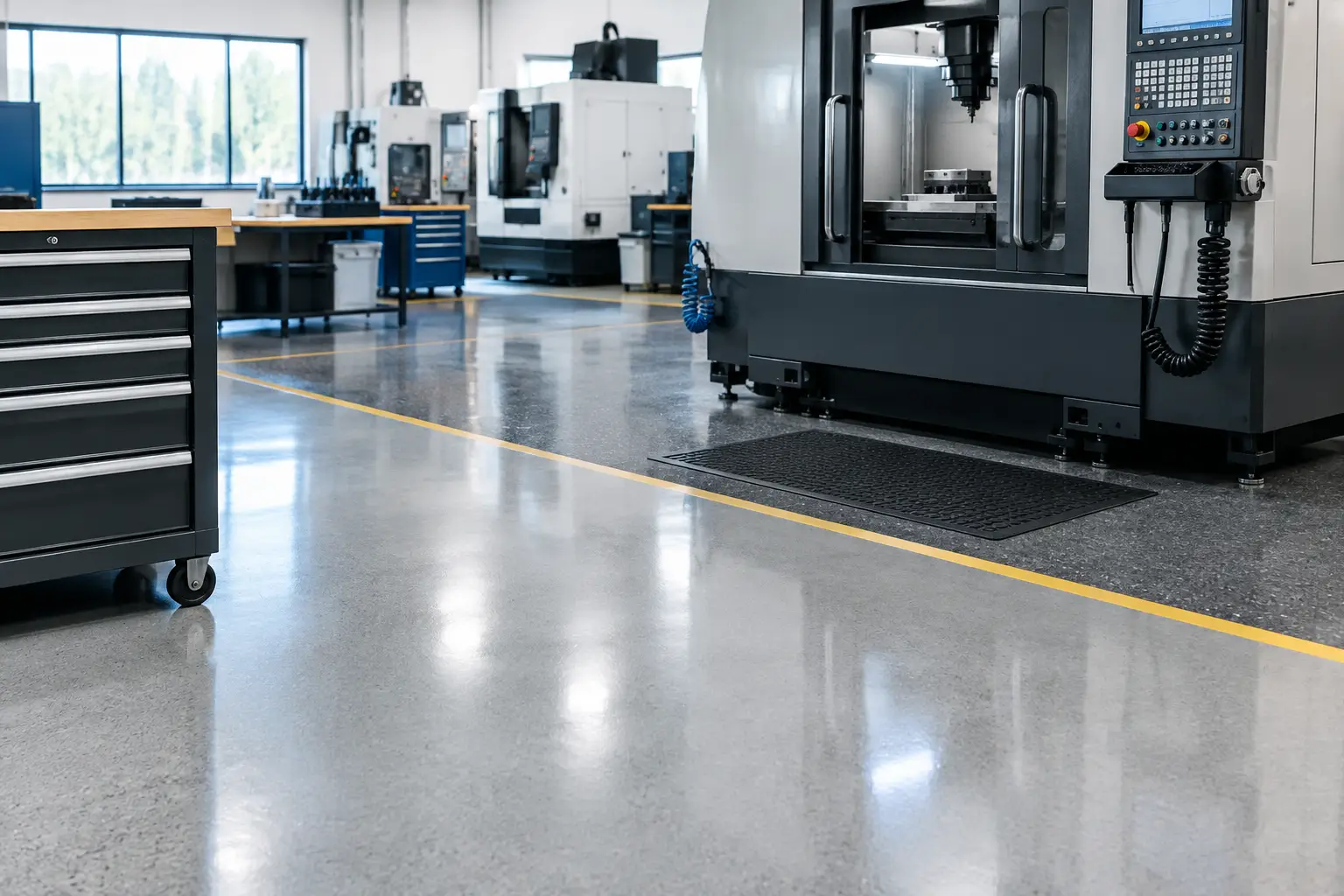
High-build epoxy systems provide a durable, cleanable surface for many machine shop environments. They can improve resistance to oils, lubricants, many chemicals, and abrasion while creating a brighter floor that supports visual control and housekeeping. Epoxy is also available in broadcast systems with textured finishes for areas where traction is a priority.
Epoxy is not a cure for moisture-related slab failure or poor surface preparation. It requires a properly prepared substrate and compatible moisture conditions. Thermal movement, heavy impact, and extreme temperature cycling can also require a different resin chemistry or a thicker, reinforced system.
Urethane Cement and Heavy-Duty Resin Mortars
For severe service areas, urethane cement and resin mortar systems offer greater thickness and impact resistance than a standard coating. These systems are well suited to locations exposed to repeated impact, thermal stress, aggressive cleaning, and demanding industrial traffic.
A thicker system can restore deteriorated surfaces and provide a more substantial wear layer, but it is not automatically necessary throughout the building. Using it selectively in high-abuse zones can deliver stronger lifecycle value than applying an expensive system where a lighter-duty floor would perform well.
Localized Concrete Repair and Floor Upgrades
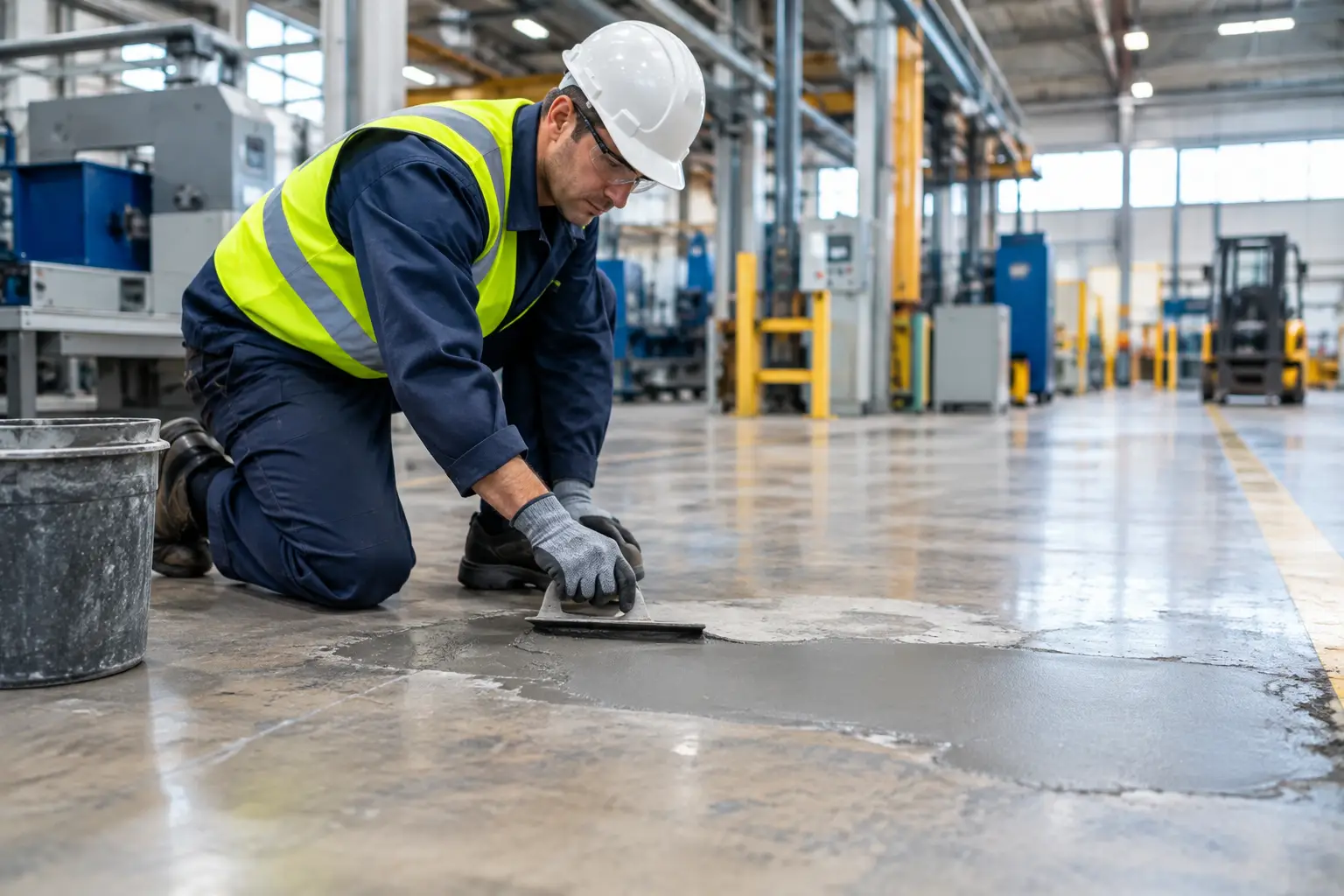
Sometimes the right answer is not a full replacement system. Grinding, surface repair, joint restoration, and targeted overlays can correct specific operating problems while limiting downtime. This approach is often effective for wheel paths, loading points, machine perimeters, and areas with isolated spalls.
Floor upgrades should be treated as performance work, not cosmetic patching. Repairs need compatible materials, proper edge preparation, and a plan for the traffic that will cross them. Poorly bonded repairs fail at the transition and become a new source of roughness, trip hazards, and equipment wear.
Flatness, Joints, and Equipment Movement
Floor flatness is frequently underestimated in machine shop planning. Forklifts, reach trucks, automated material handling equipment, and precision carts all perform better on a controlled surface. Excessive variation creates vibration, reduces load stability, accelerates wheel wear, and adds stress to equipment and operators.
Where very narrow aisle trucks operate, a Superflat floor may be required to meet defined flatness and levelness criteria. This is a measured construction outcome, not simply a smooth-looking slab. The specification, placement method, testing process, and corrective grinding plan must align with the equipment and aisle layout.
Joints deserve the same attention. Saw cuts and construction joints are designed to accommodate concrete movement, but unprotected joint edges often fail under hard-wheel traffic. Broken arrises create impact points that spread damage into the slab. Joint repair and appropriate joint fill systems help preserve both the floor and the vehicles operating on it.
In some operations, jointless flooring is the better approach. By minimizing joints across active traffic areas, a jointless system can reduce maintenance points and improve travel quality. It must still account for structural movement and perimeter conditions. Eliminating visible joints without addressing movement is not a sound engineering decision.
Specify for Contaminants, Not Assumptions
A machine shop floor may see soluble oils, synthetic coolants, petroleum lubricants, hydraulic fluid, cutting compounds, alkaline cleaners, and occasional solvent exposure. These substances do not affect every flooring material in the same way. A system that resists one fluid may discolor, soften, or lose bond under another.
The specification should identify the materials actually used on site, including cleaning chemicals and their concentrations. It should also consider exposure duration. A brief spill cleaned promptly is different from coolant that sits beneath a machine for days. Containment, drainage, cleaning practices, and maintenance access all influence flooring performance.
Texture should be selected with the same discipline. More texture can improve traction in wet areas, but excessively rough flooring traps metal fines and makes cleaning harder. A balanced profile supports safe footing without turning routine housekeeping into a labor-intensive task.
Surface Preparation Determines Service Life
The quality of surface preparation determines whether a resin floor bonds as intended. Concrete must be mechanically prepared to remove contaminants, laitance, old coatings, weak concrete, and unsound repair materials. Grinding, shot blasting, scarification, and localized demolition may all be appropriate depending on the system and slab condition.
Moisture testing and substrate evaluation belong in this stage. Moisture vapor pressure can compromise some systems even when the concrete looks dry. Oil contamination can penetrate deeply and may require removal, treatment, or localized replacement. These issues should be resolved before installation, not discovered after a new floor starts to release.
A contractor should also plan work around production realities. Phased installation, containment, cure times, access routes, and return-to-service requirements should be defined before the crew mobilizes. A technically correct floor that blocks critical operations longer than planned still creates a project failure.
Make the Decision on Lifecycle Value
The lowest-cost quote can become the highest-cost floor when repairs interrupt production, damage equipment, or create safety exposure. Evaluate machine shop flooring choices by expected service life, repairability, cleaning requirements, downtime risk, and performance at the most demanding points in the operation.
Ask whether the proposed system addresses the slab condition, traffic pattern, chemical exposure, joints, and equipment requirements. If it does not, it is not a complete flooring solution. A floor should support the work performed above it every shift, without becoming the next maintenance emergency.