
A warehouse floor rarely fails all at once. It starts with a worn travel lane, a joint that opens under forklift wheels, coating loss near a washdown area, or dust that keeps returning after cleaning. Knowing when to resurface warehouse floors allows facility leaders to act while the work is still planned, contained, and cost-effective - not after damaged concrete creates a safety event or disrupts operations.
Resurfacing is not simply an appearance upgrade. In an active distribution center, manufacturing plant, or cold storage operation, the floor is a working surface that carries traffic, supports racking interfaces, manages impact, and affects how safely people and equipment move. The right timing depends on the nature of the damage, the traffic profile, the operating environment, and whether the existing slab can still support a high-performance repair or upgrade.
When to Resurface Warehouse Floors
The most reliable signal is not age alone. A ten-year-old floor in a light-duty facility may need little more than routine joint maintenance, while a newer slab serving hard-wheeled forklifts, reach trucks, and frequent point loading may deteriorate quickly. Resurfacing becomes necessary when surface conditions begin affecting safety, equipment performance, sanitation, or production reliability.
Surface wear is exposing weak concrete
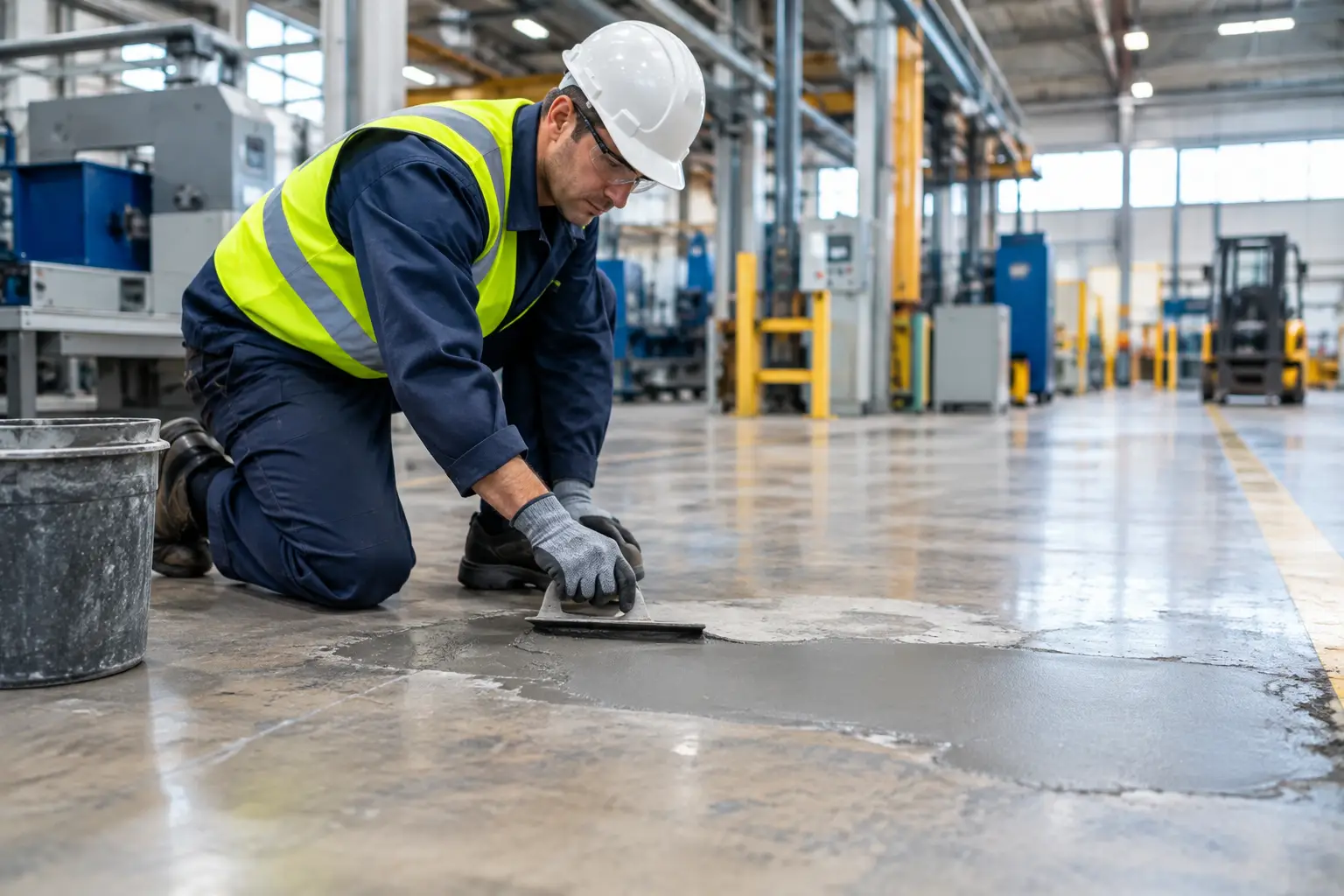
Concrete that is scaling, spalling, pitting, or dusting has lost its durable wearing surface. This is common in high-traffic lanes, loading areas, battery charging rooms, and spaces exposed to moisture or chemical attack. The damage may begin as shallow surface loss, but forklift tires and repeated impacts can quickly break away more material.
A resurfacing system can restore the wear layer when the slab remains structurally sound. Waiting until damage extends deeper into the concrete can shift the scope from surface rehabilitation to extensive removal and replacement. That increases cost, lengthens downtime, and creates more disruption to adjacent operations.
Forklift traffic is creating rough or unsafe travel paths
Warehouse floors must perform under repetitive wheel loads. When travel lanes develop potholes, uneven patches, loose aggregate, or abrupt transitions, forklifts absorb the impact. That can increase wear on wheels, axles, mast components, and loads. It also raises the risk of product instability and operator fatigue.
Facilities running very narrow aisle equipment have even tighter tolerances. For VNA operations, floor regularity directly influences truck performance, lift stability, and throughput. Local repairs that are not properly ground, leveled, and verified can be as disruptive as the original defect. A superflat floor assessment should be considered before visible wear turns into a material handling problem.
Joints are failing under traffic
Joints are designed movement locations, but they are often the first point of failure in a warehouse. Broken joint edges, missing filler, exposed arrises, and rocking slab panels create recurring impact as equipment crosses them. Once a joint begins breaking down, every pass of a loaded forklift can accelerate the damage.
Resurfacing alone may not solve this condition. The right scope may include full-depth joint repair, removal of failed materials, edge reconstruction, and installation of a traffic-capable joint filler. In some facilities, converting areas to a jointless floor system or reducing joint exposure in critical operating zones can provide a more durable long-term result.
Cleaning cannot keep up with the floor condition
A floor that traps dirt, leaks fluids into open concrete, or continually generates dust is harder to maintain and harder to inspect. This matters in food and beverage, pharmaceuticals, electronics, logistics, and any facility where cleanliness affects safety, quality, or compliance.
Resurfacing can provide a denser, more cleanable surface and can be specified for chemical resistance, abrasion resistance, slip resistance, or thermal cycling where needed. The correct system is driven by the environment. A high-build coating may suit a controlled indoor space, while a hard-wearing cementitious system may be better suited to wet processing, washdowns, or demanding service conditions.
Repairs are becoming a recurring operating expense
A recurring patch cycle is a clear warning sign. If maintenance teams are repeatedly filling cracks, replacing joint filler, patching spalls, or addressing the same traffic lanes, the floor may no longer be economical to maintain one defect at a time.
This does not mean every worn floor requires a full-facility resurfacing project. A condition assessment may show that targeted upgrades in dock approaches, main travel lanes, pick modules, and high-impact zones will control risk. The objective is to stop spending on temporary repairs that fail under the same operating loads.
Distinguish Surface Damage From Structural Problems
A quality resurfacing project begins with diagnosis. Applying a new material over unsound concrete, active moisture issues, or unresolved movement will only transfer the failure to the new surface. Surface preparation and substrate evaluation determine whether resurfacing is the right answer.
Hairline cracking, minor surface wear, and localized spalling can often be repaired effectively when properly prepared. Wider or active cracks may indicate slab movement, settlement, loading issues, or other conditions that require a different repair strategy. Moisture vapor transmission must also be evaluated before many resinous flooring systems are installed. Ignoring it can lead to debonding, blistering, and premature failure.
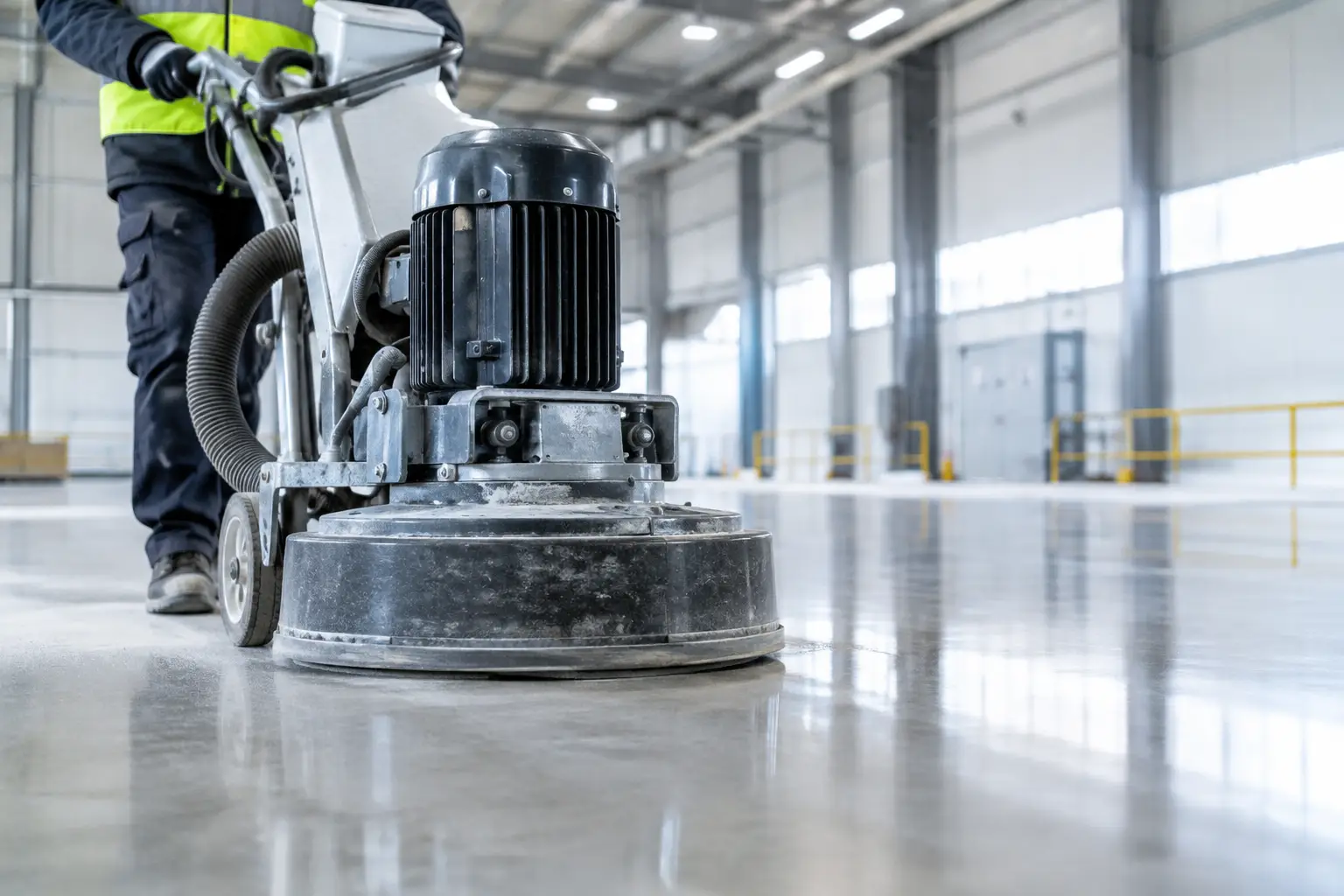
The same principle applies to flatness. Grinding can remove high spots and improve travel quality, but it cannot correct every slab condition without a clear survey and a defined performance target. In VNA environments, floor elevation, wheel paths, rack layout, and truck specifications need to be considered together.
Plan the Work Around Operations
Warehouse resurfacing succeeds when the construction plan is as disciplined as the flooring installation. Facility leaders should define which areas can be released, how traffic will be rerouted, what equipment must stay operational, and how cure times will affect the schedule. A floor system with strong long-term performance may not be the right choice if its installation sequence conflicts with a fixed opening date or peak shipping period.
A phased approach often reduces operational risk. Work can be divided by aisle, bay, department, or travel corridor, with controlled handoffs between the contractor and operations team. However, phasing has trade-offs. More mobilizations and protection work can add cost, and transitions between phases must be planned so they do not create hazards or interfere with material flow.
Before work begins, document the traffic type, wheel loads, chemical exposure, temperature conditions, washdown requirements, and required downtime. These details shape the specification. They also prevent a common mistake: selecting a floor based on initial price rather than the demands it will face every shift.
Choose the Right Upgrade for the Failure Mode
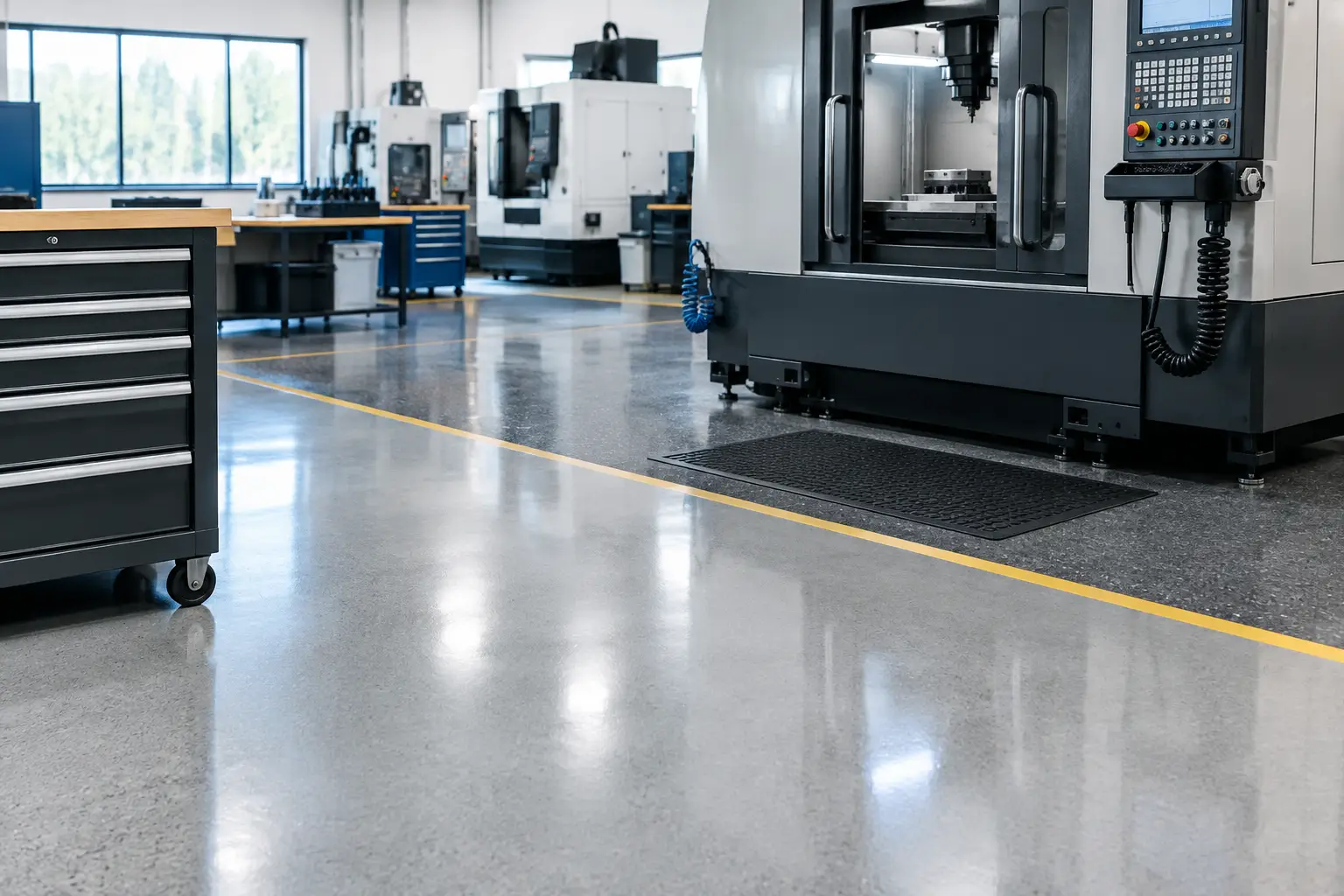
There is no single warehouse resurfacing solution. Grinding and polishing may be appropriate where the goal is to improve surface profile, remove defects, and create a durable, low-maintenance concrete finish. A resinous system may be appropriate where chemical resistance, color zoning, cleanability, or a sealed surface is required. Cementitious repair materials may be needed to rebuild damaged concrete before a final finish is applied.
Joint repair should be treated as a performance item, not a cosmetic detail. In high-traffic facilities, joint materials must support the expected wheel loads and protect concrete edges from repeated impact. For operations that demand continuous travel quality, jointless systems and superflat construction can reduce the interruptions associated with conventional slab joints.
The best specification is the one that addresses the actual failure mechanism and supports the facility's operating requirements. It should also account for future use. A floor built for pallet jacks may not be adequate after a conversion to reach trucks, automation, higher rack loads, or more aggressive cleaning protocols.
Act Before the Floor Controls the Schedule
The right time to resurface is usually earlier than the point when damage becomes impossible to ignore. Review floor conditions during maintenance planning, after changes in equipment or traffic patterns, and before major operational expansions. A documented assessment gives decision-makers time to compare options, align capital spending, and schedule work around production rather than in response to an emergency.
Osis Group approaches floor upgrades as an operational performance decision. The standard is not simply a new-looking surface. It is a floor system prepared, repaired, and installed to withstand the conditions that matter in your facility.
When wear, joint failure, or traffic-related damage begins affecting safety and productivity, treat it as a planning signal. Early, properly specified resurfacing protects the slab, the equipment that travels across it, and the operating schedule that depends on both.