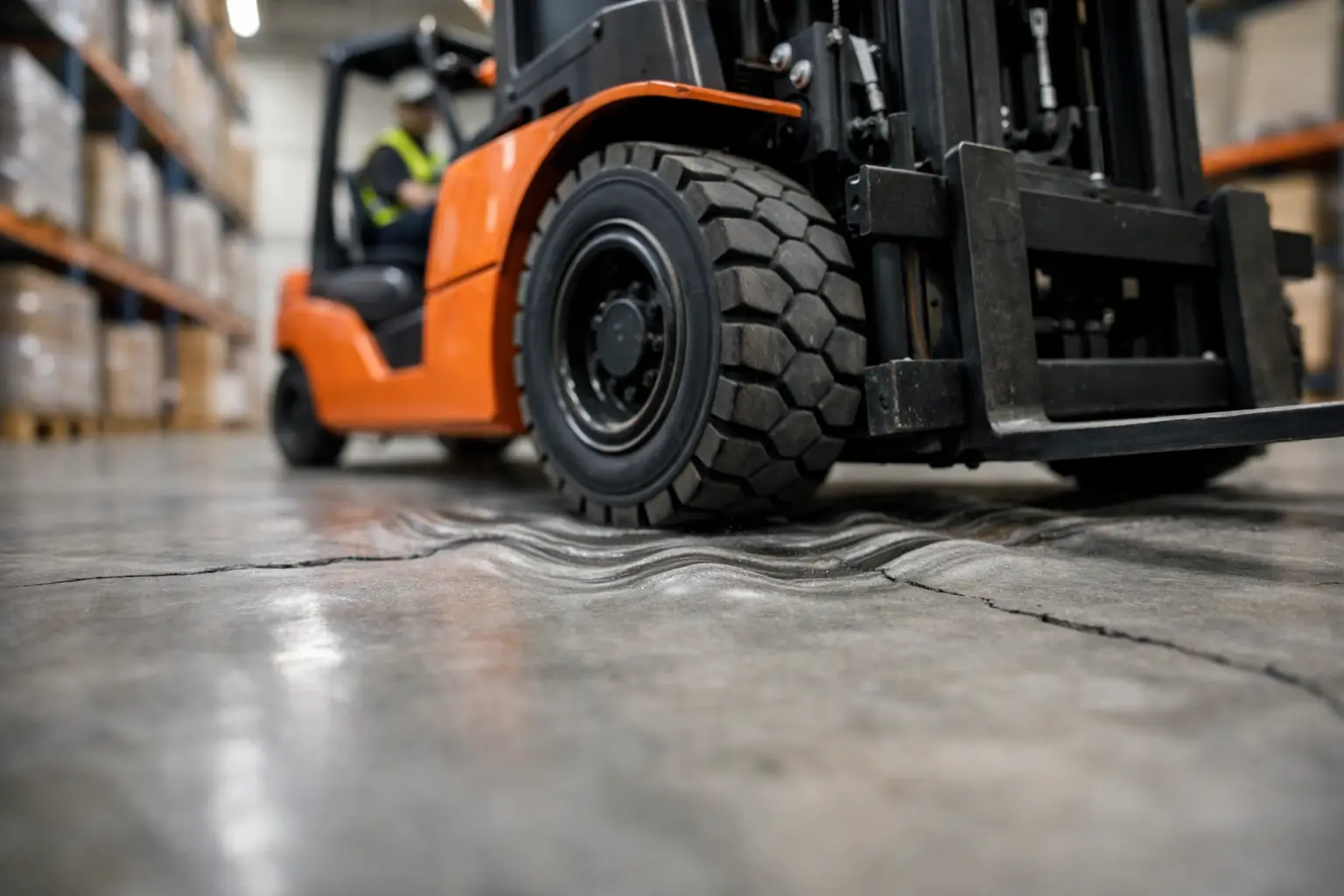
A forklift that shakes across a travel aisle is not just an operator comfort issue. Repeated vibration transfers impact into the truck, mast, load, rack system, and concrete slab. Over time, it can contribute to driver fatigue, product damage, maintenance costs, and slower travel speeds. In narrow-aisle operations, the consequences are more severe: what causes forklift floor vibration can also affect wire-guided truck stability, rack clearances, and the productivity the facility was designed to achieve.
The root cause is rarely one condition viewed in isolation. Forklift vibration usually results from the interaction between the floor profile, joints, traffic pattern, wheel condition, truck configuration, and carried load. A reliable assessment starts by separating normal operating feedback from impact events that indicate a floor or equipment problem.
What Causes Forklift Floor Vibration?
Forklifts react to abrupt changes in elevation. Even a small step, dip, ridge, or joint defect becomes more noticeable as travel speed, axle load, and wheel hardness increase. Most warehouse trucks use hard polyurethane or cushion tires that transmit floor irregularities directly into the chassis. Pneumatic tires can absorb more movement, but they do not correct a defective slab.
Floor vibration is therefore often most pronounced in high-traffic routes: dock approaches, cross aisles, turning areas, rack entry points, freezer transitions, and routes that cross construction joints. The same floor may feel acceptable under a lightly loaded counterbalance forklift yet perform poorly under a loaded reach truck or very narrow aisle truck.
A quality floor evaluation considers where the vibration occurs, the direction of travel, the truck type, the load state, and whether the condition is growing. That evidence helps distinguish a local repair issue from a broader flatness or slab-support problem.
Floor Conditions That Create Vibration
Joint faulting and worn joint edges
Joints are a common source of forklift impact. As concrete shrinks during curing, joints open. If load transfer across the joint is inadequate, the slab panels can move independently under wheel loads. One side of the joint eventually sits higher than the other, creating a condition known as faulting.
Forklift wheels strike that elevation difference repeatedly. The impact can break joint edges, widen the defect, and accelerate deterioration. This cycle is especially aggressive where loaded trucks cross the same joint at an angle or where small wheels carry high point loads.
Joint damage is not always obvious from a standing inspection. A joint may appear intact yet produce a sharp impact under a loaded truck. Measuring the differential elevation and observing the joint under traffic provides a more useful picture than visual appearance alone.
Slab curling and uneven floor flatness
Concrete slabs can curl when the top and bottom of the slab shrink or change moisture content at different rates. Edges and corners lift slightly, particularly near joints. Under traffic, those areas may deflect and create a repeating bump sensation.
Broader flatness issues also matter. A floor can be generally level across a building while still containing short, frequent elevation changes that create vibration. Floor levelness describes overall slope and elevation across longer distances. Floor flatness describes local smoothness. For forklifts, particularly narrow-aisle equipment, local smoothness along the wheel path is often the more critical performance factor.
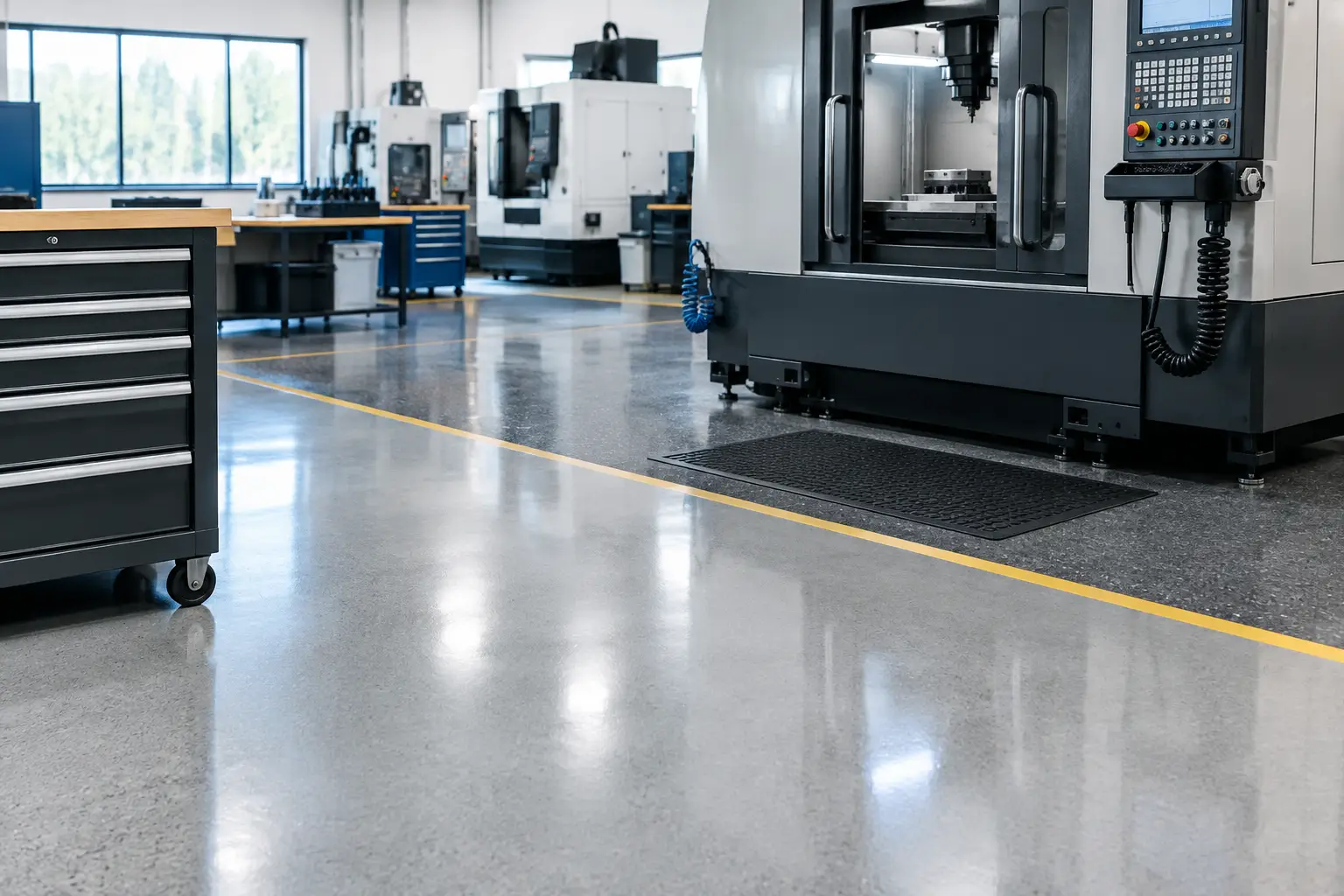
This is why a conventional slab may be adequate for general warehouse traffic but unsuitable for very narrow aisle operations. Superflat floors are engineered and constructed around the actual truck travel paths, where tolerance demands are significantly tighter.
Settlement, voids, and loss of slab support
When a slab loses support beneath it, vibration may be accompanied by movement, cracking, or a hollow response. Causes can include poorly compacted subgrade, moisture-related erosion, leaking utilities, or deterioration beneath slab joints.
A settled panel creates a longer transition than a failed joint edge, but the result can be equally disruptive. In severe cases, trucks may rock as they cross the affected area. Surface grinding alone may reduce a high point, but it cannot resolve an unsupported slab. The repair method must address the actual cause, not only the visible profile.
Poorly performing repairs and transitions
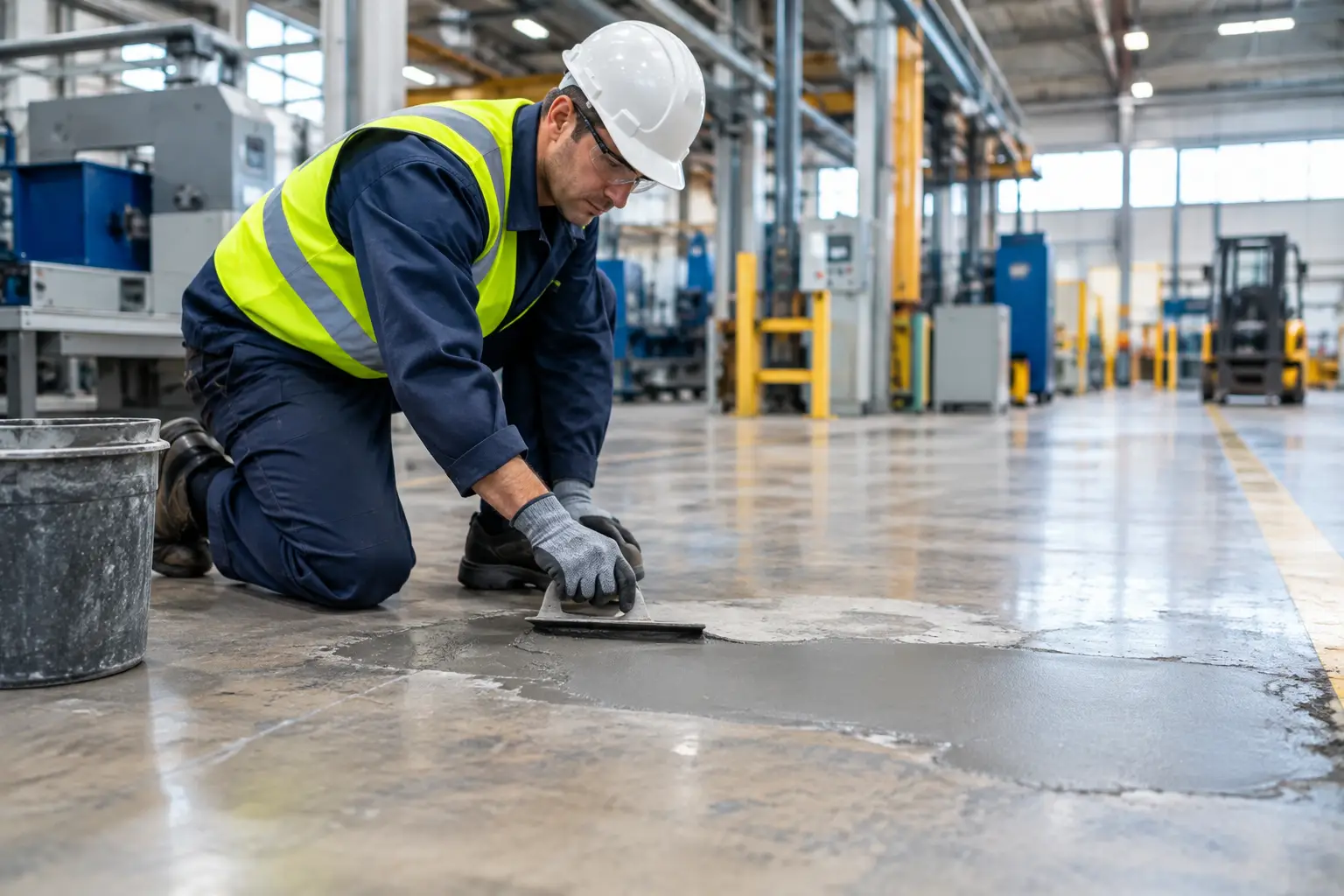
A repair can become the roughest point on the route when it is placed proud of the surrounding slab, feathered too thin, poorly bonded, or finished without controlling the transition. Dock plates, door thresholds, trench covers, and changes between old and new slabs can create the same issue.
These locations need to be evaluated as part of the complete travel path. A localized repair is successful only when the forklift can cross it smoothly under normal working load.
Equipment and Operating Factors That Increase the Effect
The floor is often the primary concern, but forklifts can amplify vibration. Worn, flat-spotted, chunked, or unevenly sized tires make an otherwise acceptable surface feel rough. Wheel bearings, suspension components where applicable, mast rollers, and loose load-handling components can also create or worsen a vibration complaint.
Truck speed changes the severity. A joint that produces a manageable bump at low speed can generate a damaging impact when operators travel faster to meet throughput demands. Excessive speed should be controlled, but it should not be used to normalize a defective travel route.
Load condition matters as well. A loaded truck applies greater wheel force and may respond differently due to load center, mast height, and axle distribution. Tall loads can make vibration more visible because the load sways even when the floor defect is modest. This does not mean the load is the cause. It may be exposing a floor condition that requires attention.
For very narrow aisle trucks, guidance systems add another layer. Wire guidance helps maintain the truck's lateral path, but it does not compensate for a rough longitudinal profile. A wire-guided truck operating on an uneven floor may remain centered while still transmitting vibration through the mast and load.
How to Diagnose the Problem Before Specifying Repairs
Start with a route-based inspection, not a general walk-through. Identify the exact points where operators report vibration and mark them by aisle, bay, direction of travel, and load condition. Compare unloaded and loaded runs. If the impact occurs at the same physical point every time, the floor is the likely starting point. If it follows the truck regardless of route, inspect the equipment first.
Next, inspect joints, cracks, repairs, and transitions for spalling, elevation differences, loose material, and signs of slab movement. Look for tire marks and polished areas that reveal repeated traffic paths. These often identify where the operational load is concentrated, even when the original layout has changed.
Quantitative measurement is essential when vibration affects high-throughput or narrow-aisle areas. Floor profile testing can establish the actual condition of the wheel paths and compare it with the performance needs of the equipment. In VNA facilities, specialized defined-traffic testing is more meaningful than a general floor measurement because trucks travel in fixed lanes.
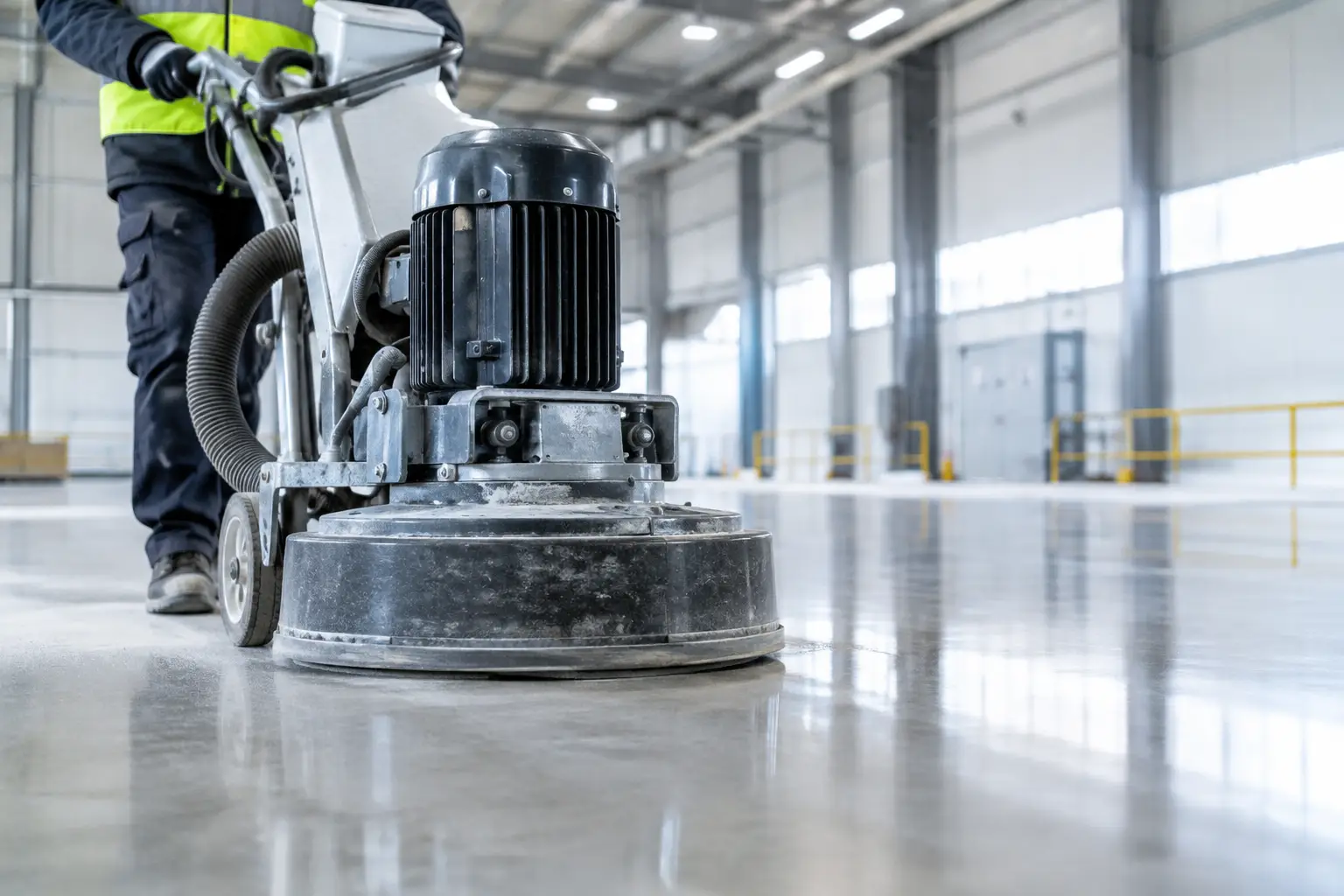
The findings should lead the repair plan. Grinding may be appropriate for localized high spots and profile correction. Joint repair may be needed where edges have failed or faulting has developed. Slab stabilization or replacement may be required where support has been lost. Each option has limits, and the correct choice depends on the source, extent, and operational tolerance of the defect.
Prioritizing Repairs by Operational Risk
Not every rough area requires the same response. First priority should go to locations that create safety exposure, product instability, or recurring equipment damage. High-speed cross aisles, dock transitions, heavy-load routes, and VNA travel lanes usually justify immediate attention.
The next priority is preventing minor defects from becoming structural repairs. Early joint repair can protect slab edges before repeated impacts break down a larger section of concrete. Correcting a local high point can also prevent trucks from developing a habitual bounce pattern that damages adjacent joints and repairs.
For facilities planning automation, racking changes, or new VNA equipment, floor performance should be confirmed before the equipment arrives. Retrofitting a floor after operations begin is possible, but it requires more coordination and can constrain uptime. Floor upgrade and grinding work should be planned around traffic windows, cure requirements, dust control, and the routes that must remain open.
Osis Group approaches these conditions as operating-floor problems, not cosmetic concrete defects. The standard is a travel surface that supports safe equipment movement, protects the slab, and performs under the actual demands of the facility.
A forklift vibration complaint is useful operational data. Treat it as an early warning, verify the cause along the wheel path, and correct the condition before routine traffic turns a manageable defect into a larger interruption.