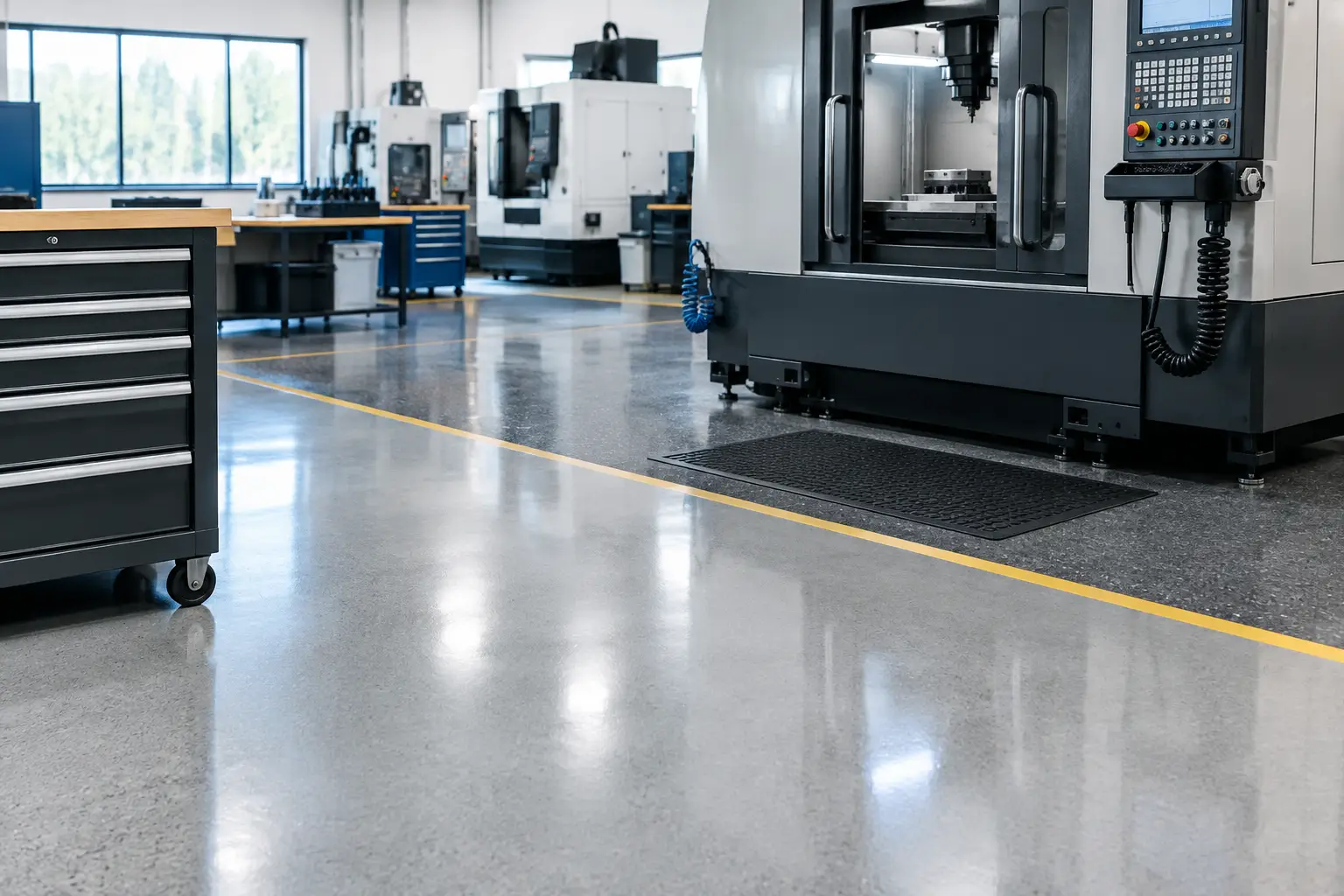

A VNA floor system review is not a cosmetic inspection. In a very narrow aisle warehouse, the slab is part of the material-handling system. Its profile affects truck stability, lift height, rack clearance, travel speed, operator confidence, and the useful life of wheels, guidance equipment, and racking.
A floor that appears acceptable for conventional reach trucks can still be unsuitable for VNA operations. Small variations in level across an aisle, local joint deterioration, or poorly planned repairs can create measurable performance problems once trucks operate at height. The right review establishes whether the floor supports the truck, rack, and guidance system as a complete operating environment.
What a VNA Floor System Review Should Assess
The review begins with the operational requirement, not a generic flatness target. VNA trucks operate in fixed travel paths and are highly sensitive to the floor profile within those paths. The applicable tolerance depends on the truck type, lift height, aisle width, mast configuration, wheelbase, load characteristics, and whether the truck uses wire, rail, or other guidance.
This is why conventional floor flatness numbers alone do not provide a complete answer. FF and FL values can be useful for broad slab assessment, but they do not always describe the longitudinal and transverse conditions a VNA truck experiences in a specific aisle. A VNA review should examine the floor where the truck will actually travel and identify conditions that can affect elevation, sway, clearance, and guidance accuracy.
A disciplined assessment typically considers four connected conditions:
- Floor profile and levelness within each proposed or active truck path
- Construction joints, saw cuts, cracks, and repair areas that interrupt travel
- Surface integrity, including spalling, delamination, abrasion, and wheel wear
- Coordination between the floor, racking layout, and truck guidance method
The purpose is not to produce a pass-or-fail report in isolation. It is to determine what work, if any, is required for safe and productive VNA operation.
Floor Flatness Is Only Part of the Requirement
A superflat floor is designed for defined operating lanes, not for a warehouse as a whole. The critical question is whether the finished floor profile meets the tolerance required by the selected VNA equipment in its exact travel path.
Longitudinal variations can cause repeated mast movement and load sway as a truck travels down the aisle. Transverse variations can affect truck stability, clearance to racking, and the accuracy of guidance systems. At lower lift heights, these issues may be tolerable. At significant elevations, the same floor movement can become a safety, productivity, and damage concern.
The floor must also be evaluated in relation to the rack design. Aisle centerlines, rack plumbness, base plate elevations, and clearances all interact. If a slab correction changes the finished elevation at the rack interface, that impact needs to be understood before work begins. A flooring scope that ignores the racking and equipment package can shift risk instead of eliminating it.
For new construction, the most reliable approach is to coordinate VNA tolerances before the slab is placed. For existing facilities, a detailed survey establishes whether targeted grinding, localized reconstruction, or a broader floor upgrade is the appropriate path. Each option has different cost, downtime, and long-term performance implications.
Joints and Repairs Deserve Close Attention
In a VNA aisle, joints are not minor details. Repeated wheel impact at a joint can lead to edge spalling, widening gaps, vibration, and damage to truck wheels. These conditions also make it harder to maintain the precise ride quality expected from a VNA floor.
Joint location matters as much as joint condition. A joint placed directly in the primary wheel path will receive concentrated traffic and requires a repair strategy suited to that loading. Standard patching materials or poorly prepared repairs often fail because they do not address the full depth of damage, the edge geometry, or the ongoing movement at the joint.
A proper review identifies whether joints need repair, armoring, filling, or isolation from the defined truck path. It should also examine existing patches. A patch that is visually sound may still sit proud of the surrounding floor or contain a low area that affects truck travel. Precision grinding can correct some profile issues, but it cannot solve a weak substrate, an active crack, or a structurally damaged joint.
Jointless floor designs can reduce the number of interruptions within operating lanes when they are properly specified and installed. They are not a blanket solution for every facility. Slab design, placement sequence, reinforcement strategy, curing conditions, and traffic demands must support the selected system. The objective is controlled performance, not simply fewer visible joints.
Guidance Systems Must Be Reviewed With the Floor
Wire guidance is often selected because it helps maintain consistent truck travel within narrow aisles. Its performance depends on accurate installation and stable floor conditions. The wire channel must be positioned to the truck manufacturer's requirements, protected from damage, and restored with materials that maintain the required surface profile.
A VNA floor system review should confirm that the proposed guidance layout aligns with the racking, aisle centerline, truck specification, and floor correction plan. Installing wire guidance before completing necessary grinding or repairs can create avoidable rework. Conversely, aggressive floor removal after wire installation can damage the system or compromise signal performance.
Rail guidance introduces a different set of coordination requirements, including rail alignment, anchoring, floor elevations, and clearances at aisle transitions. Neither wire nor rail guidance compensates for a floor that is outside the equipment's operational tolerance. Guidance keeps the truck on course. It does not remove the effects of an uneven travel surface.
Choosing the Right Corrective Scope
Not every VNA floor requires replacement. Many existing slabs can be upgraded when the underlying concrete is sound and the profile issues are limited to specific lanes or localized defects. The key is matching the corrective method to the condition.
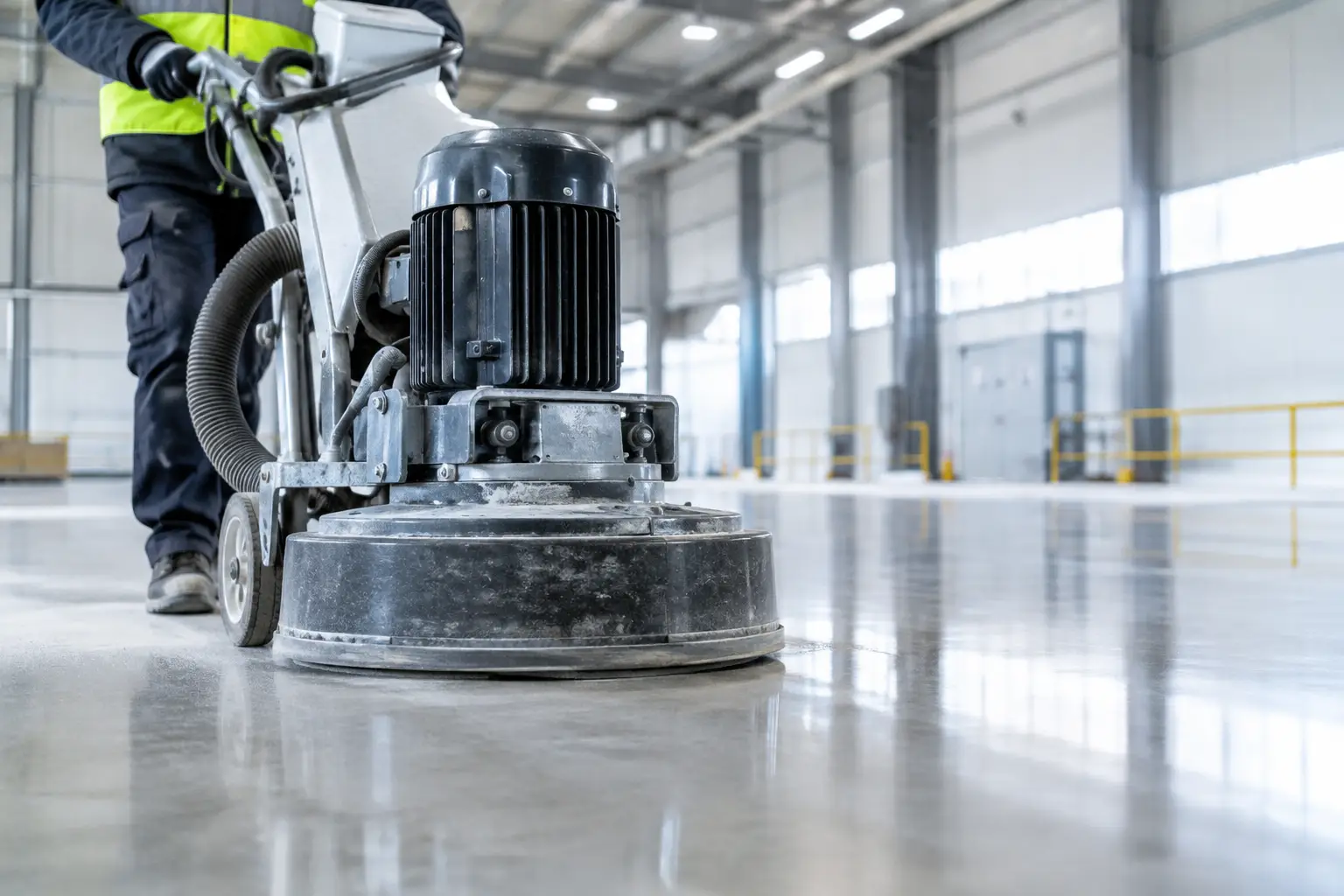
Precision grinding can improve high areas and refine travel paths with controlled material removal. It is effective when there is sufficient slab thickness, the floor has no widespread structural distress, and the required correction can be achieved without exposing aggregate or weakening critical areas. Grinding should be measured and verified, not treated as a visual improvement exercise.
Localized joint repair is appropriate when damage is isolated but must be executed to withstand repetitive hard-wheel traffic. Full-depth repair or slab replacement may be necessary where there is significant settlement, cracking, loss of support, or extensive deterioration. In some facilities, operational constraints make phased work the best option, with defined aisle closures and return-to-service criteria.
The lowest initial-cost repair is not always the lowest lifecycle-cost solution. A patch that fails under VNA traffic can interrupt operations, damage equipment, and require repeat mobilization. For a high-throughput warehouse, the cost of an unavailable aisle can exceed the cost of doing the correction correctly the first time.
What a Useful Review Delivers
A useful VNA floor review provides more than measurements. It should define the areas surveyed, the operational criteria used, the defects affecting performance, and the corrective recommendations in a form that supports a construction decision.
For active facilities, the review should also address execution risk. Can work be completed by aisle, during planned shutdowns, or outside peak shipping periods? How will dust, debris, curing time, and access be managed? What quality checks will verify the final floor profile before trucks return to service?
Osis Group approaches VNA floor work as a coordinated industrial flooring scope, including survey support, precision grinding, floor and joint repair, and wire guidance installation where required. The standard is straightforward: the finished floor must support the operation it was built to serve.
Before committing to a truck fleet, rack installation, or warehouse expansion, verify the floor against the actual VNA operating requirement. That early decision protects safety, equipment performance, and the opening schedule when there is little room for correction.