
A wire-guided VNA truck can only perform as accurately as the floor beneath its guidance path. To prepare floors for wire guidance, facility teams must control more than the wire slot itself. Surface flatness, slab condition, joint movement, layout accuracy, and protection of the finished installation all affect truck tracking, rack clearance, and long-term operating reliability.
Wire guidance is not a decorative floor feature or a standalone saw-cutting task. It is a precision installation within an operating surface. When preparation is incomplete, the result can be recurring wire faults, damaged joint edges, inconsistent truck travel, and costly disruptions after racking and equipment are already in place.
Start With the VNA Operating Requirements
The floor preparation plan should begin with the truck, aisle, and rack design. VNA equipment operates with tighter tolerances than conventional lift trucks, and wire guidance supports repeatable travel through narrow rack aisles. The wire path must align precisely with the intended truck centerline and the final rack geometry.
Confirm the truck manufacturer's wire guidance requirements before field work starts. Requirements vary by equipment type and may include wire depth, saw-cut width, loop configuration, lead-in areas, signal testing criteria, and acceptable proximity to steel reinforcement or other embedded metal. A layout that works for one system may not meet the operating requirements of another.
The rack layout also matters. If aisle centerlines change after the wire is installed, correcting the system can require extensive cutting, patching, and retesting. Finalize racking locations, aisle widths, battery charging areas, crossings, and truck entry points before setting out the wire route.
Assess the Existing Slab Before Cutting
A wire guidance installation should not conceal unresolved floor defects. Start with a detailed condition assessment of the proposed VNA aisles and transition areas. The goal is to identify conditions that could compromise the wire slot, the repair material, or truck performance.
Inspect for cracks, spalls, failing patches, joint deterioration, curling, surface delamination, and areas of moisture-related distress. Measure floor flatness and levelness where VNA traffic will operate. A guidance wire keeps a truck centered laterally, but it does not correct an uneven, unstable, or poorly profiled slab.
In existing facilities, slab movement and joint condition deserve particular attention. A wire crossing an active joint may be exposed to repeated movement and impact. If the joint edges are broken down or the joint is opening and closing beyond the repair system's capability, the wire channel can crack or debond. The joint must be repaired and evaluated for movement before wire installation proceeds.
Subsurface conditions also require review. Existing drawings, ground-penetrating radar, and targeted scanning can help identify reinforcing steel, post-tension cables, conduits, and embedded utilities. Saw cutting without this information introduces unnecessary risk. The required wire depth must be achieved without compromising the slab or contacting embedded elements.
Determine Whether Grinding Is Required
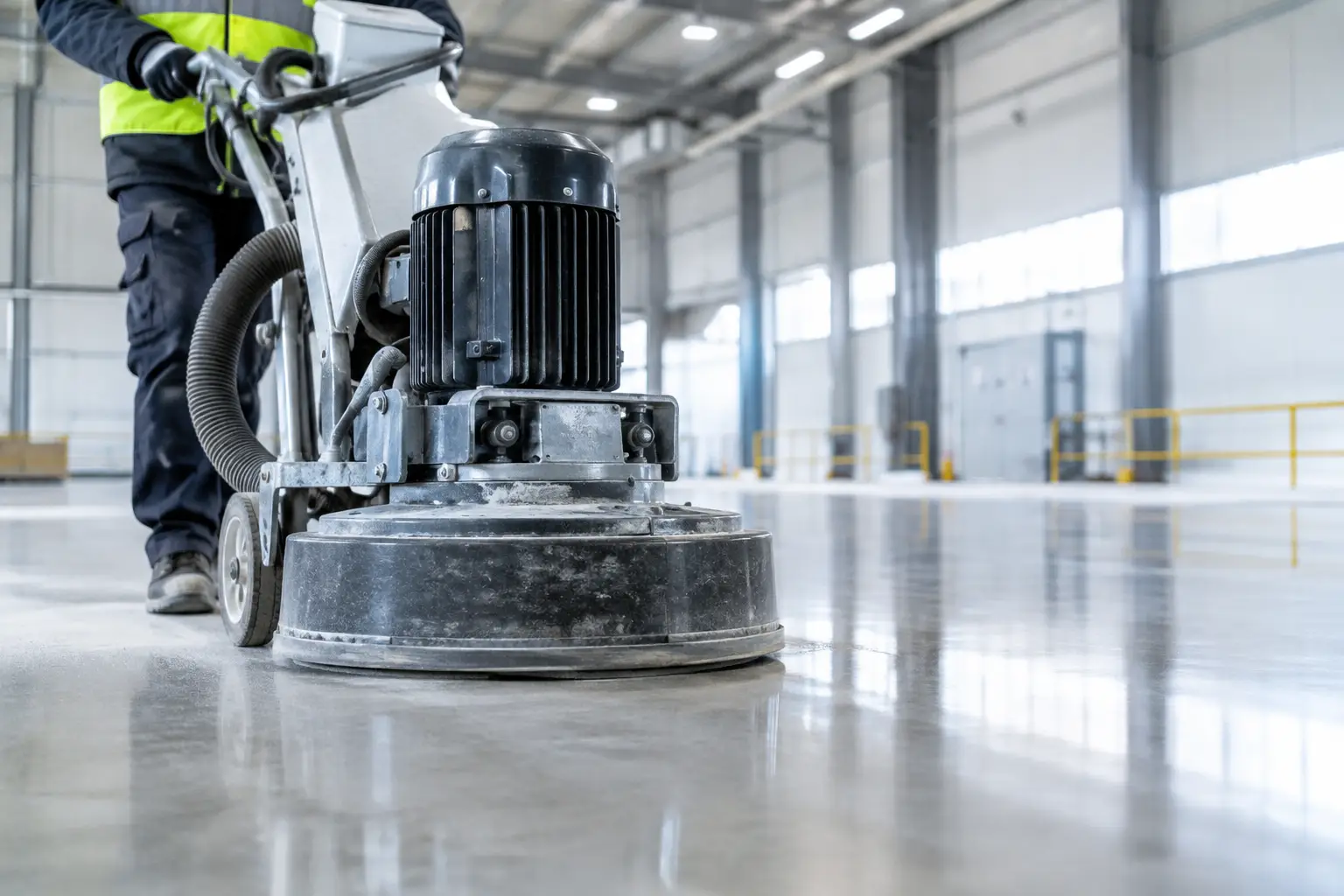
Grinding is often required to bring the aisle surface into acceptable operating condition, remove weak material, or create a consistent profile for repairs. It may also be part of a broader floor upgrade program when an existing warehouse is being converted for VNA use.
Grinding is not automatically the right answer for every slab. If the floor has significant elevation variation, severe curling, or widespread structural distress, a more comprehensive remediation plan may be needed. The right scope depends on the measured condition of the floor, the VNA equipment specification, and the remaining service life expected from the facility.
Establish a Controlled Layout
Wire guidance layout requires survey-level discipline. Establish permanent control points outside areas likely to be disturbed by grinding, repairs, or active construction. From these points, mark each aisle centerline, turning zone, and connection back to the controller location.
The installation team should verify dimensions against the approved rack plan, not just field markings. A small offset can reduce the intended clearance between truck, pallet, and rack. In narrow aisles, minor errors become operational constraints.
Coordinate the wire route with floor joints, equipment pads, dock approaches, fire protection work, and future penetrations. Where a crossing or transition is unavoidable, define how the slot and wire will be protected. Last-minute field decisions are a common source of weak repairs and difficult maintenance access.
Before cutting begins, confirm the final sequence with the operations team. Wire guidance work creates dust, noise, temporary access restrictions, and curing periods. A controlled schedule can keep adjacent zones operating while isolating the active work area.
Cut, Clean, and Install the Wire Correctly
The saw cut must be straight, consistent in depth, and clean at the edges. Irregular cuts make it harder to place the wire at the specified depth and leave less reliable space for the fill material. Cutting equipment should be selected for the slab condition and required geometry, with effective dust collection to protect active operations and prevent contamination.
After cutting, remove all slurry, dust, and loose concrete from the channel. This step is essential. Fill material cannot achieve dependable bond strength over residual cutting debris or moisture that exceeds product limits. The slot should be inspected before wire placement, especially at joints, direction changes, and intersections.
Install the guidance wire to the manufacturer's specified configuration and test its continuity before encapsulation. Do not assume a visually correct installation is electrically correct. Testing before the channel is filled allows defects to be corrected without removing cured material.
The fill material must be suitable for industrial traffic and compatible with the slab, wire system, and expected joint movement. It needs sufficient strength to support wheel loads at the channel edge while maintaining adhesion under vibration, abrasion, and routine cleaning. Material selection is not simply a matter of choosing the hardest product. An overly rigid fill at a moving location can crack, while an unsuitable flexible material can wear prematurely under concentrated truck traffic.
Repair Joints and Defects as Part of the System
Floor and joint repairs around VNA aisles should be completed to the same performance standard as the wire channel. A truck that repeatedly impacts broken joint edges creates vibration, increases maintenance demand, and can damage the surrounding guidance installation.
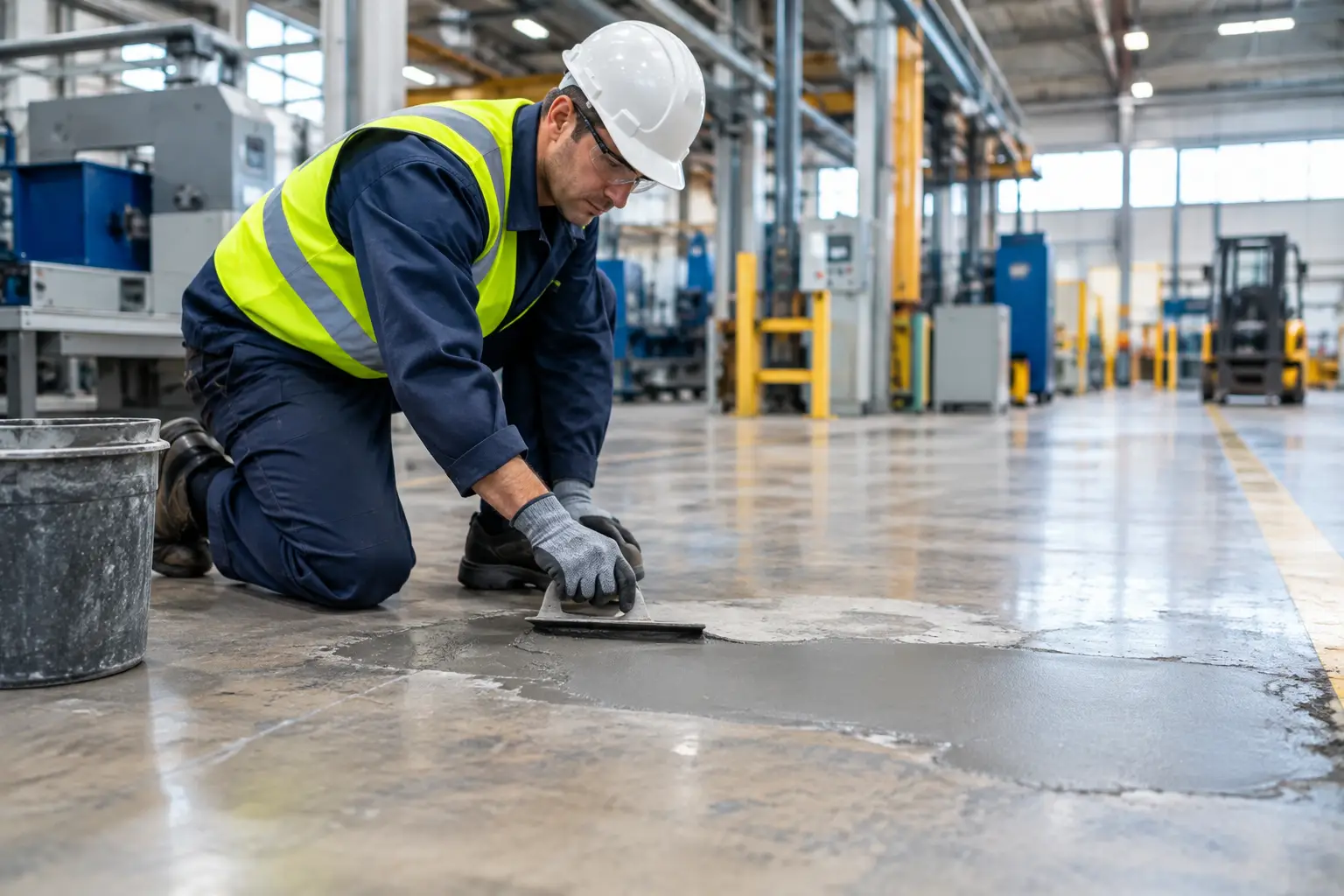
Repair spalls by removing unsound concrete back to stable material, preparing clean repair boundaries, and placing a heavy-duty repair system matched to service conditions. Joint edges require special attention where hard wheels, load wheels, or turret trucks pass repeatedly. The repair should restore a stable transition rather than create a new high spot or abrupt edge.
For jointless floor systems, the preparation focus shifts toward cracks, localized damage, and surface profile rather than routine saw-cut joint crossings. Even then, movement-related cracks and previous repairs must be assessed before a wire path is installed.
Verify Performance Before Turnover
Testing should occur before the aisle returns to service. Electrical checks confirm continuity, signal strength, and correct connection to the guidance controller. Operational testing with the intended VNA truck confirms that the truck acquires the wire correctly, tracks consistently, and transitions through entry and exit areas as designed.
The floor should also be visually inspected for channel defects, incomplete fill, edge damage, surface contamination, and repairs that could interfere with truck travel. Document the wire layout, test results, repair locations, and controller connections for future maintenance.
A useful turnover review should answer four practical questions:
- Does every aisle match the approved rack and truck layout?
- Has each wire circuit been tested before and after channel filling?
- Are joints, spalls, and transitions stable under expected wheel traffic?
- Has the operations team received clear guidance on cleaning, repairs, and future penetrations?
Protect the Installation During Startup
The period between installation and full warehouse operation is often where avoidable damage occurs. Other trades may cross the floor with lifts, carts, ladders, or pallet jacks before fill materials reach required cure strength. Mark the completed aisles clearly and restrict traffic until the specified return-to-service period has passed.
Once the facility is operating, include wire guidance channels and aisle joints in the floor inspection program. Look for cracking, chipping, loss of fill, exposed wire, and repeated wheel impact at the same locations. Early repair is less disruptive than waiting for a wire fault or a truck tracking complaint.
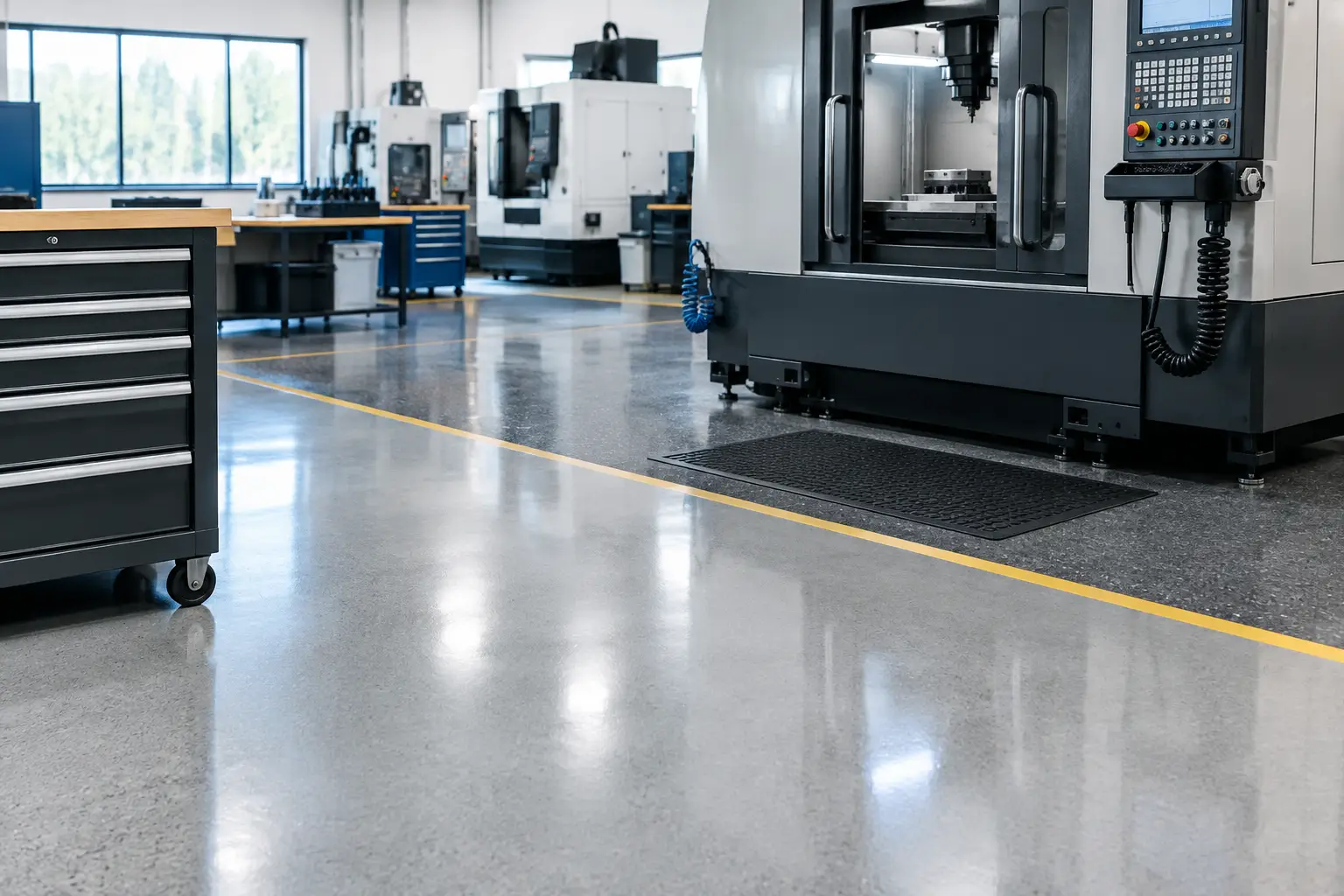
For facilities converting to VNA operations, the strongest outcome comes from treating the slab, repairs, floor profile, and guidance wire as one engineered operating surface. Precision in preparation protects the accuracy that wire guidance is meant to deliver.