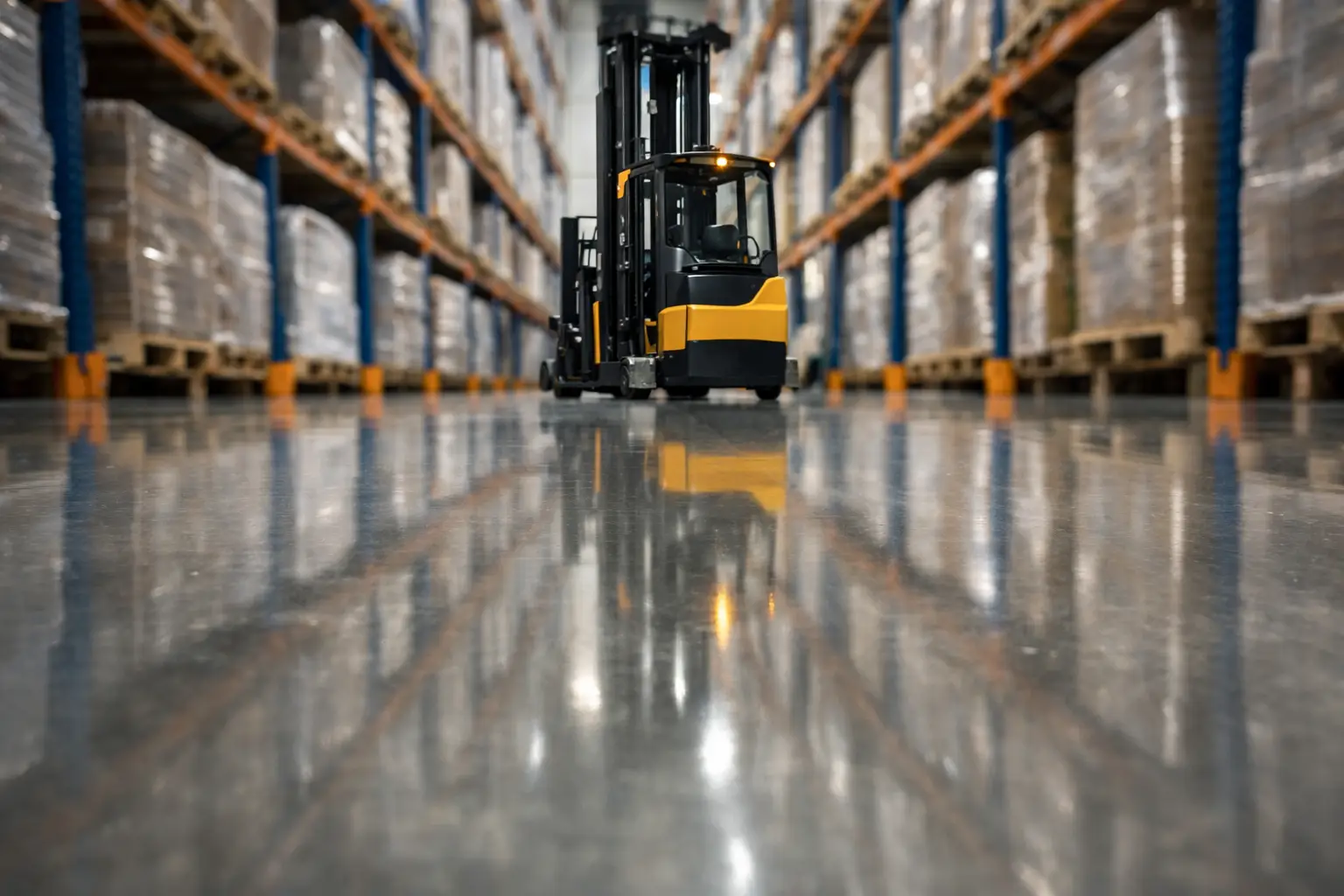
A superflat floor can remain structurally serviceable for decades, but the more useful question is: how long do superflat floors last at their required operational tolerance? For a very narrow aisle warehouse, a floor is performing only when it continues to support the specified truck, guide system, load profile, and lift heights without creating instability, lost productivity, or repeated repair work.
A properly designed, placed, and maintained superflat slab can provide 20 years or more of service. In controlled warehouse conditions, many floors perform much longer. However, superflatness is not a permanent material property. It is a measured condition at handover that can be affected over time by joint movement, slab curling, impact damage, wheel traffic, moisture, settlement, and poorly executed repairs.
For operations that depend on VNA equipment, the lifecycle target should not be simply avoiding concrete failure. It should be preserving floor performance for the equipment and operating model the facility relies on.
How Long Do Superflat Floors Last in VNA Warehouses?
The expected life of a superflat floor depends on what is being measured. The concrete slab itself may have a long structural lifespan. The floor's ability to maintain narrow-aisle flatness tolerances can be shorter if traffic, joints, or building conditions are not managed correctly.
In a well-designed warehouse with stable subgrade conditions, appropriate concrete mix design, disciplined placement, correct curing, and controlled traffic, a superflat floor may maintain strong performance for 15 to 25 years or longer. That range is not a warranty or a universal rule. It assumes the floor was specified for the actual operation, not merely installed to achieve an initial flatness reading.
A facility with high-frequency VNA truck movements, hard-loaded wheels, frequent rack changes, or sustained heavy point loads may need localized intervention much earlier. The first signs are often concentrated at construction joints, saw-cut joints, aisle transitions, loading interfaces, and areas exposed to repeated impact.
The critical distinction is this: a slab can look acceptable to a casual observer while no longer meeting the practical requirements of a high-reach truck operating at elevation. Small changes at floor level are magnified as lift height increases.
What Determines Superflat Floor Service Life?
Initial specification and installation quality
Long-term performance starts before concrete arrives on site. The floor profile must be matched to the truck type, guidance method, aisle layout, lift height, wheel configuration, load capacity, and expected traffic frequency. A generic flatness specification is not a substitute for a VNA-specific design and verification plan.
Placement quality matters equally. Superflat work requires control of base conditions, concrete consistency, pour sequencing, strike-off, finishing, curing, and joint layout. Shortcuts during any of these stages can create a floor that meets part of the initial requirement but has limited tolerance for long-term movement and traffic.
Verification should be completed with the correct measurement method for the specification. For defined traffic aisles, a profile-based approach is often more meaningful than relying only on general random-traffic floor numbers. The acceptance criteria should reflect how the trucks will actually travel.
Joints and joint movement
Joints are commonly the first lifecycle risk in industrial concrete floors. They are designed to accommodate shrinkage and movement, but they also receive concentrated wheel impact. As joint edges wear, spall, or lose support, trucks experience a recurring vertical event at every crossing.
That impact affects more than the concrete. It can increase operator discomfort, accelerate wheel wear, affect truck stability, and reduce the consistency of VNA travel. A joint that appears minor at ground level can become a serious operational issue in a high-lift aisle.
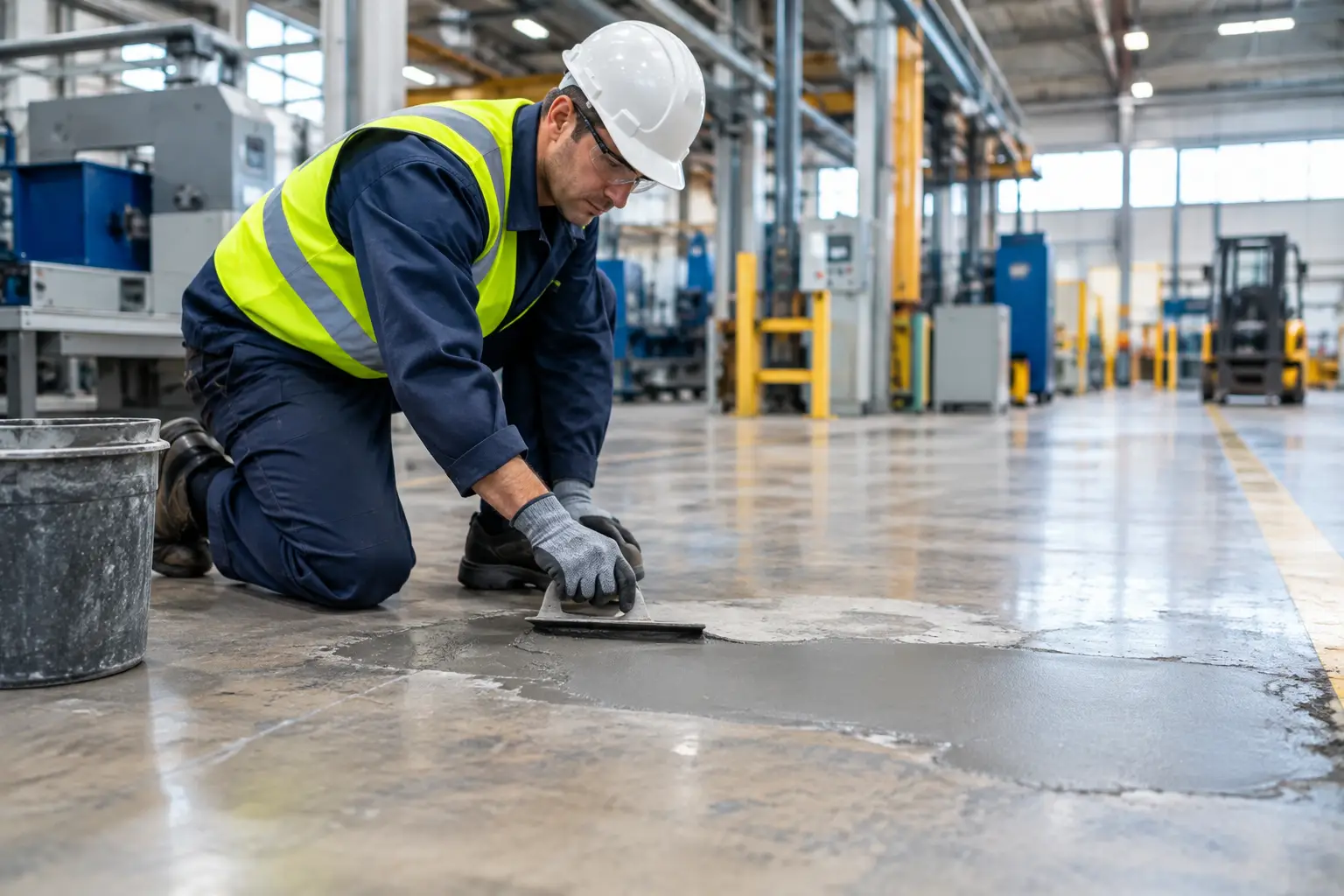
Early joint repair is usually less disruptive and less expensive than waiting for widespread edge deterioration. Proper repair work restores support beneath the damaged area, rebuilds the arris, and returns the crossing to the required profile. Filling a damaged joint without addressing the underlying loss of support is rarely a durable solution.
Traffic, loading, and equipment changes
A floor designed for one operating profile may not perform the same way after the warehouse changes. Higher-capacity trucks, different wheel compounds, increased travel frequency, revised rack layouts, or added automation can materially alter the demands on the slab.
Hard wheels and repetitive wheel paths concentrate stresses in predictable locations. The same is true of heavy rack legs, staging activity, and impacts from pallets or forklifts. Where traffic is consistent, inspection should be equally consistent. A small repair program focused on known stress points can protect the larger floor system.
Moisture, subgrade support, and building movement
Concrete floors respond to their environment. Moisture conditions, slab curling, temperature variation, vapor transmission, and changes in subgrade support can affect floor profile and joint performance. In some cases, the issue is not surface wear but movement beneath the slab.
This is why a repair strategy must begin with diagnosis. Grinding may correct isolated high areas. Joint repair may address a deteriorated crossing. But neither approach will solve ongoing settlement, slab rocking, or moisture-related distress without addressing the source of the problem.
Maintaining Superflatness Instead of Reacting to Failure
Superflat floors benefit from planned condition management. Facility teams do not need to resurvey every aisle continuously, but they should have a disciplined process for identifying changes before they become operating constraints.
Start with a documented baseline at turnover. Keep the original floor drawings, test results, joint layout, repair history, equipment specifications, and traffic plan available to operations and maintenance teams. When performance concerns develop, these records make it easier to distinguish normal wear from a change that requires intervention.
Routine visual inspections should focus on joint edges, cracks, spalls, isolated high spots, wheel-path wear, and transitions between old and new floor areas. Operators are often the first to recognize a problem. Reports of truck sway, vibration, unusual mast movement, or recurring wheel damage should be treated as floor-performance signals, not only equipment issues.
Where tolerances are critical, periodic profile checks in active VNA aisles provide objective data. This is particularly valuable after major equipment changes, rack modifications, seismic events, or repairs to adjacent areas. Measured results allow the facility to prioritize work based on operational risk rather than appearance alone.
Repair Options That Protect Warehouse Uptime
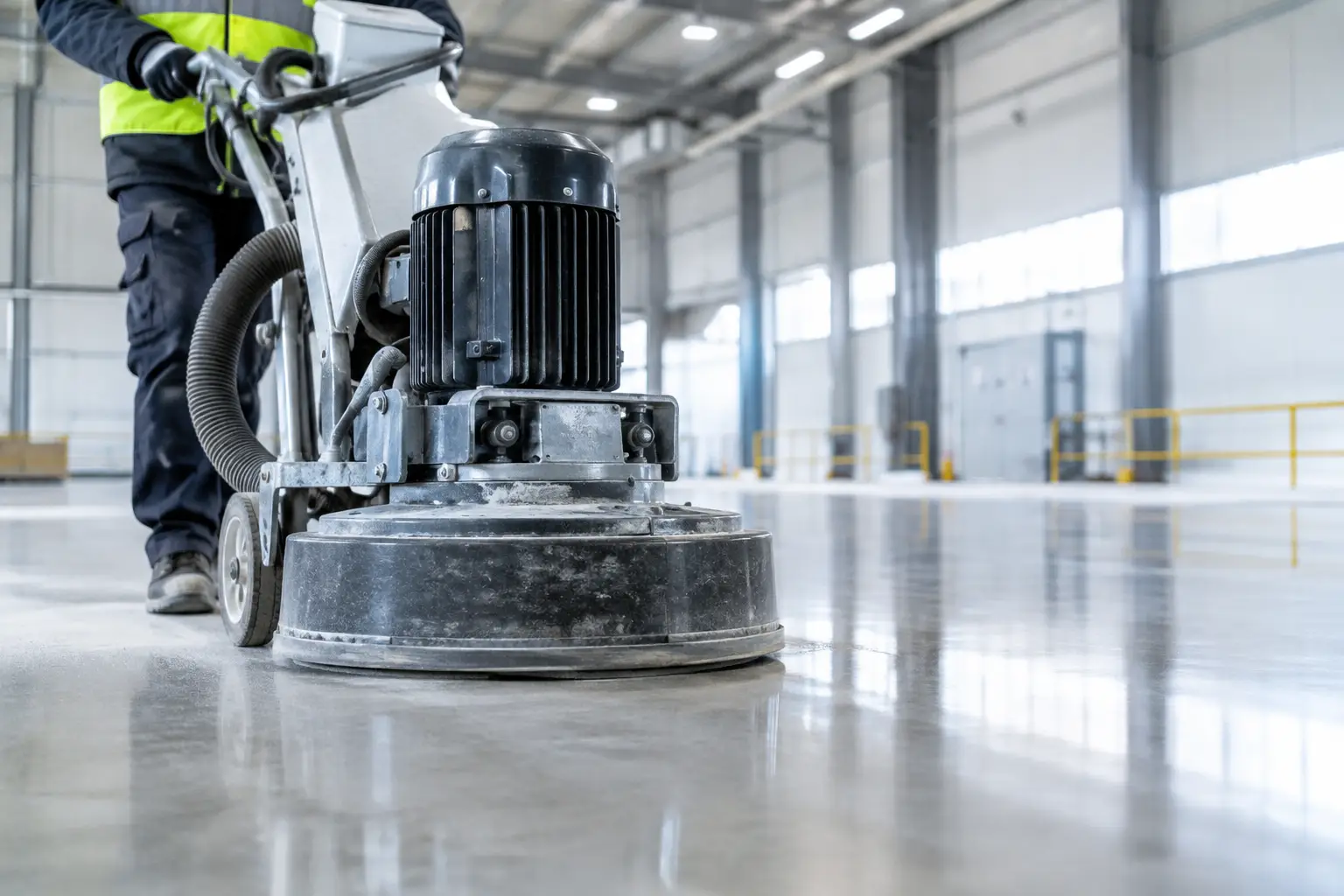
The right repair method depends on the defect and the cause. Surface grinding can remove isolated high points and correct transitions when sufficient slab thickness remains. It is effective when used with accurate measurement and a defined target profile. Excessive or unplanned grinding, however, can expose aggregate, reduce cover, or create drainage and finish issues.
Joint repair is appropriate where edge breakdown, spalling, or failed filler creates impact and loss of support. High-performance repair materials and careful preparation are essential, especially in high-frequency wheel paths. The repaired section must be shaped and finished to match the functional profile of the aisle, not merely patched flush by eye.
For broader floor deviations, a targeted floor upgrade program may combine survey work, grinding, joint reconstruction, crack repair, and verification. In some facilities, operational restrictions or equipment adjustments may be needed while a long-term correction is planned. The goal is to preserve safe throughput with the least possible downtime.
Wire guidance introduces another consideration. Guide wire installation, repair, and floor remediation must be coordinated carefully so that floor work does not compromise guidance accuracy or create a new profile issue along the travel path.
When Replacement Becomes the Better Decision
Not every aging superflat floor requires replacement. Localized deterioration can often be repaired successfully when the slab remains stable and the underlying design is sound. Replacement becomes more likely when deviations are widespread, subgrade support is compromised, joints have deteriorated across large areas, or the facility's current VNA operation exceeds the original floor design.
Replacement also deserves consideration when repeated spot repairs are creating a fragmented surface with inconsistent performance. There is a point where recurring interventions cost more in lost productivity, safety exposure, and maintenance than a planned capital project.
A qualified assessment should evaluate the slab, joints, subgrade indicators, operational requirements, and future equipment plans together. A floor is not an isolated asset. It is part of the warehouse's material-handling system.
For facilities built around VNA performance, the best lifecycle strategy is straightforward: specify the floor for the real operation, verify it at handover, monitor the areas that carry the highest risk, and repair defects before they become routine. That approach keeps floor tolerance, equipment reliability, and warehouse uptime working toward the same standard of excellence.