
A failed floor joint is rarely just a concrete issue. In a warehouse, plant, distribution center, or cold-storage operation, it becomes a traffic hazard, a source of equipment damage, and a point of recurring maintenance. This guide to floor joint durability addresses what causes joints to fail, how to assess their condition, and how to specify repairs that hold up under real industrial use.
Floor joints carry more punishment than most areas of an industrial slab. Forklift wheels strike joint edges repeatedly. Loaded lift trucks transfer concentrated force into narrow points. Cleaning, temperature movement, moisture, and slab curling can compound the damage. When joint performance is treated as an afterthought, the cost appears later through disrupted operations, damaged goods, rough travel, and premature slab deterioration.
Why Floor Joint Durability Matters
Concrete expands, contracts, shrinks, and moves. Joints are intentionally placed to control where that movement occurs. They are not defects in the floor. The problem begins when a joint cannot support the traffic crossing it or when its sealant, filler, or edges are no longer matched to operating conditions.
Joint failure typically starts at the arris - the exposed concrete edge along a joint. As hard wheels pass over an unsupported edge, impact chips the concrete. Small breaks become wider spalls, and wider spalls create a sharper impact with every pass. The cycle accelerates quickly in high-traffic lanes.
For operations leaders, the consequences are measurable. Damaged joints can increase vibration and wear on forklifts, affect operator comfort, create instability for sensitive loads, and introduce trip or wheel-strike hazards. In very narrow aisle operations, poor joint condition can also interfere with the precise travel environment required for VNA equipment. A durable joint system protects the floor and the operation using it.
The Main Causes of Joint Failure
No repair material can compensate for a wrong diagnosis. Before selecting a treatment, determine why the joint has deteriorated and whether the slab is still moving.
Repeated Hard-Wheel Traffic
Forklifts with polyurethane, nylon, or hard composition wheels place high point loads at joints. The issue is especially severe where traffic follows fixed travel paths, turns frequently, or crosses joints under load. A joint that performs acceptably under light pedestrian traffic may fail rapidly under a lift-truck fleet.
Traffic loading is not only about vehicle weight. Wheel type, tire diameter, axle configuration, travel speed, turning patterns, and load frequency all influence impact at the joint edge. A facility with continuous three-shift traffic needs a different joint strategy than a low-volume storage area.
Unsupported Joint Edges
Joint edges need support to resist impact. If the filler is too soft, poorly bonded, recessed, or installed before the slab has completed most of its shrinkage, the edge may remain unsupported. As the slab panels separate, a rigid filler can lose contact with one or both edges. Traffic then strikes an unsupported arris and begins breaking it down.
This is why timing and material selection matter. Semi-rigid fillers are often used in traffic-bearing joints because they provide edge support while accommodating the expected joint opening. But the right material depends on joint movement, service temperature, and traffic demands. A one-size-fits-all approach creates avoidable failure.
Moisture, Contamination, and Poor Preparation
Joint repairs depend on bond. Oil, dust, moisture, old sealant residue, weak concrete, and poorly prepared sidewalls can prevent a repair system from anchoring correctly. Surface preparation must remove damaged material and expose sound concrete with clean, properly profiled faces.
Moisture conditions deserve particular attention. Some materials tolerate damp concrete, while others require dry conditions. A contractor must verify the actual slab condition rather than assume a product will perform outside its installation limits.
Slab Movement and Curling
Concrete slabs move as they dry, respond to temperature, and interact with the subbase. Curling can lift slab corners or edges, leaving a joint with uneven elevation. Differential movement at a joint may signal broader slab support concerns, not simply a filler failure.
Where movement is significant, the repair must address the condition rather than conceal it. Routing and filling alone may not be adequate when joint edges have lost support, panels are rocking, or the substrate beneath the slab has deteriorated.
How to Assess Joint Condition Before Repair
A useful joint assessment begins with the traffic pattern, not only the visible damage. Identify the primary forklift routes, intersections, loading areas, freezer thresholds, washdown zones, and areas where heavy equipment stops or turns. These are often the first locations to show distress.
Document the width and depth of failed areas, the degree of edge spalling, the condition of existing filler, and whether there is a height difference across the joint. Look for crushed filler, open gaps, broken edges, hollow-sounding concrete, standing water, and recurring repairs in the same location.
Also confirm whether the joint is a contraction joint, construction joint, isolation joint, or an expansion joint. These joints have different movement expectations and cannot be repaired or filled under the same assumption. Filling a movement joint with a rigid system intended for a saw-cut control joint can transfer stress into the slab and cause additional damage.
For facilities with flatness-critical operations, evaluate the joint within the context of the full travel path. Superflat and VNA floors demand more than a visually clean repair. Joint transitions must support consistent wheel travel and preserve the floor performance required by the equipment.
Selecting a Repair System That Fits the Operation
The best repair is the one matched to the joint type, slab condition, and operating environment. It is not always the fastest or lowest-cost option at installation.
For narrow, stable saw-cut joints in heavy forklift areas, a properly installed semi-rigid joint filler may provide the edge support needed to limit spalling. For joints with broken concrete edges, the repair may require saw cutting or routing to sound concrete, rebuilding the arris with an industrial-grade repair mortar or resinous material, then installing the specified filler.
Where a joint is subject to larger movement, a more flexible sealant system may be necessary. That choice may reduce edge support compared with a semi-rigid filler, so the specification must weigh movement capacity against traffic exposure. In some cases, operational controls or a protective transition detail may be needed as part of the solution.
Temperature is another deciding factor. Cold-storage and freezer facilities require materials that can cure and perform in low-temperature conditions. Food and beverage plants may need systems that also resist washdowns, thermal cycling, and chemical exposure. Manufacturing facilities may prioritize resistance to oils, abrasion, or impacts from carts and heavy rolling loads.
Installation Quality Determines Service Life
Even a well-selected repair system will underperform if installation discipline is weak. The work should begin with clear limits of repair and a plan for maintaining safe traffic flow. In active facilities, sequencing matters as much as material selection.
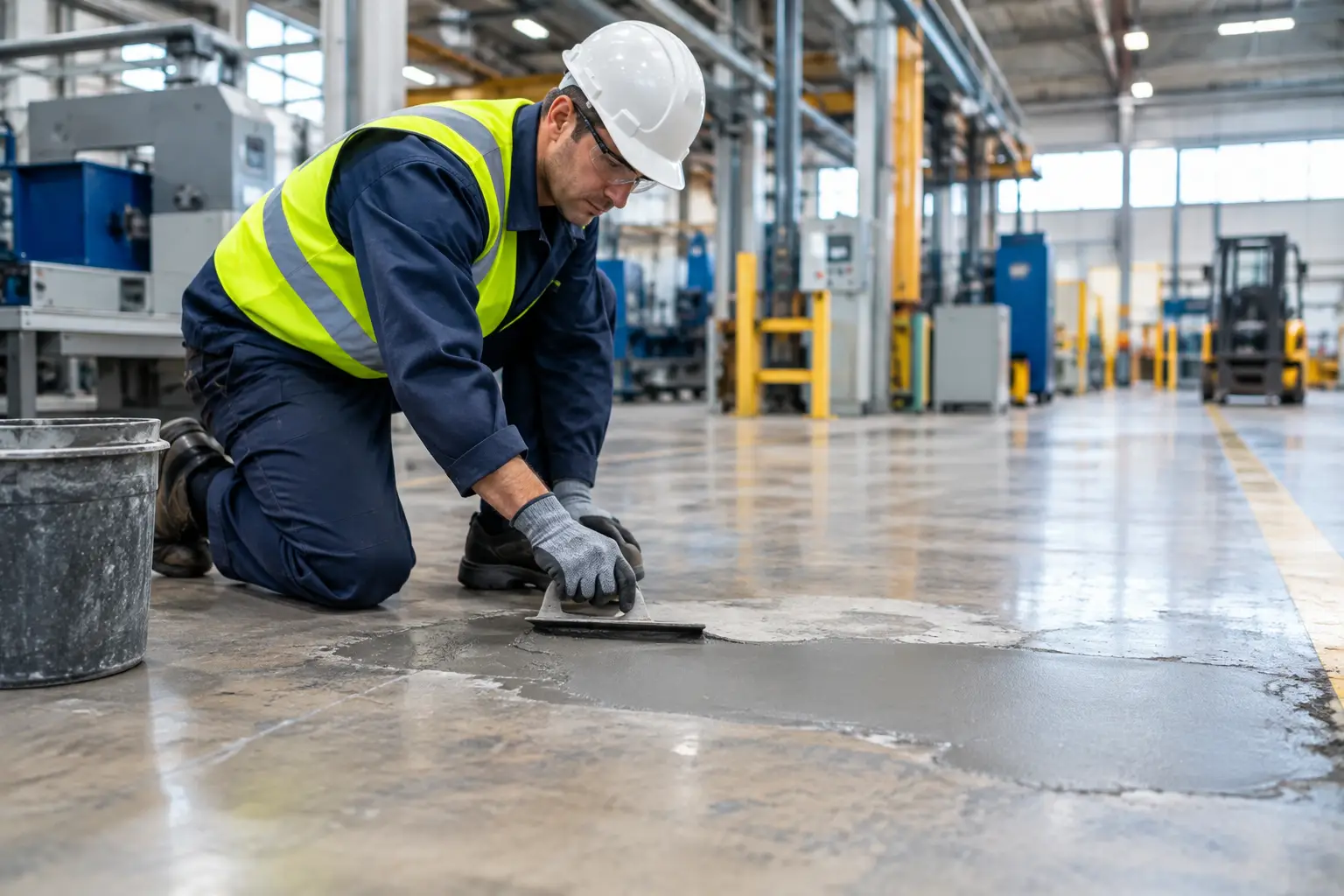
Damaged concrete must be removed back to sound material. Repair boundaries should be clean and consistent, with edges prepared to support a strong bond. Dust removal is not a cosmetic step. Residual debris can compromise adhesion and shorten repair life.
Joint fillers must be placed at the correct depth and finished to the intended elevation. In many hard-wheel traffic applications, a filler that is slightly proud after installation is allowed to wear into alignment with the slab. A filler installed too low from the start can leave edges unsupported. The required detail depends on the material system and the facility's traffic profile.
Cure time must also be respected. Reopening a repair before it reaches the required strength can damage the work immediately. For time-sensitive projects, rapid-cure systems can reduce downtime, but they still require proper preparation, placement, and quality control.
Osis Group approaches floor and joint repair as an operational performance issue, with specification, preparation, installation, and reopening requirements aligned to the facility's use.
Preventing Repeat Joint Damage
A repair program should include routine inspection of high-traffic lanes rather than waiting for failures to become severe. Early repair is usually less disruptive and less expensive than rebuilding wide areas of deteriorated concrete.
Coordinate floor maintenance with fleet management. Review wheel condition and wheel material, control excessive speed across damaged transitions, and monitor routes where loaded trucks repeatedly turn. If an operation has changed - heavier loads, different vehicles, higher traffic volume, or new automation - the original joint system may no longer fit the demand.
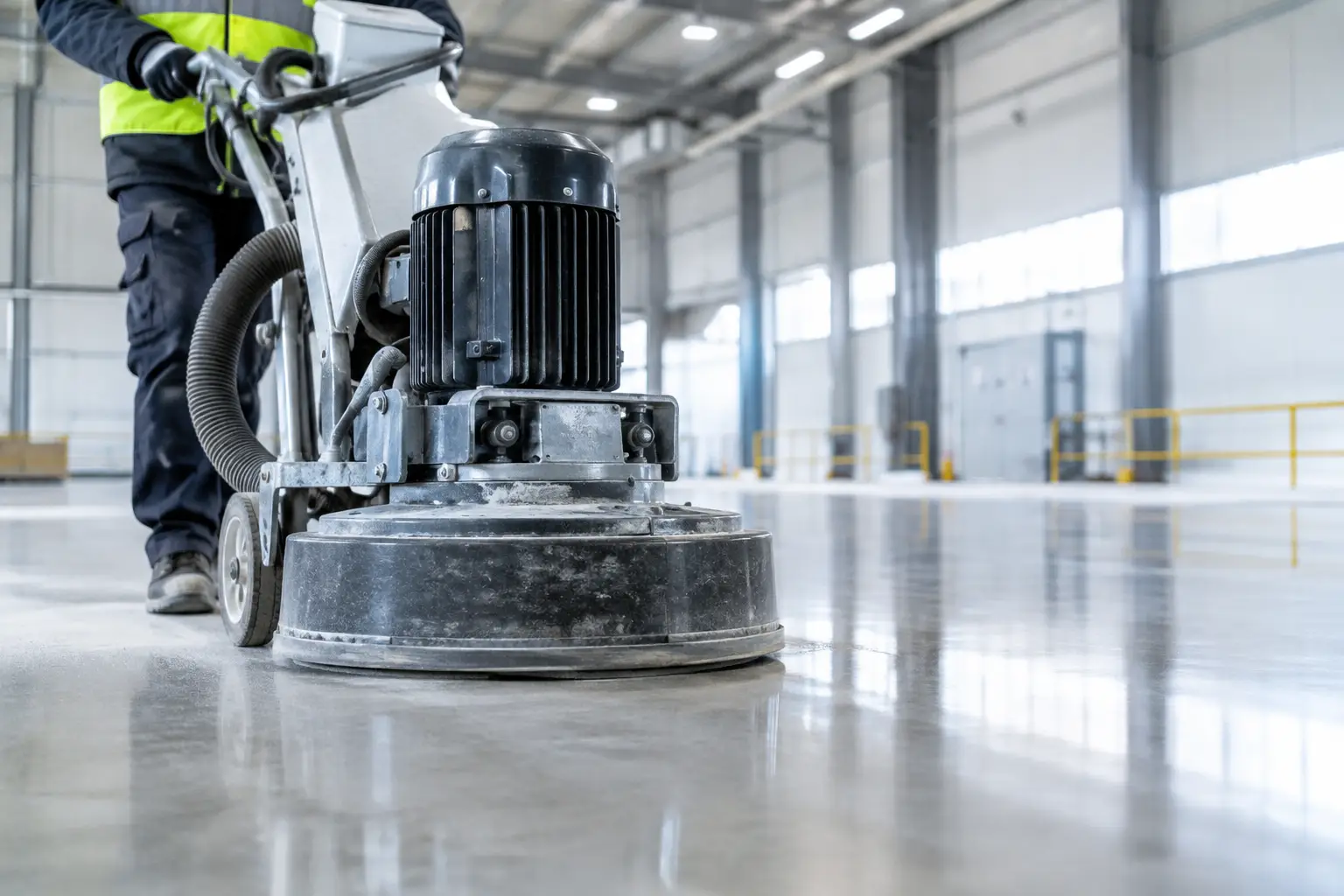
When upgrading an older floor, consider the wider surface condition as well. Grinding can improve rough transitions and remove localized irregularities, while targeted joint repair restores edge support. In some facilities, a broader floor upgrade or jointless floor strategy may provide better lifecycle value than repeated isolated repairs.
A Durable Joint Is a Managed Detail
Floor joints are small in area but large in operational impact. Their durability depends on correct joint identification, an honest assessment of slab movement and traffic, disciplined preparation, and materials selected for actual service conditions.
The most effective time to address a failing joint is before it becomes a lane-wide concrete repair. Treat it as a critical floor detail, schedule the work around operations, and demand an installation standard that protects the floor long after the crew leaves the site.