In the modern supply chain, efficiency is often measured in seconds. For large-scale distribution centers and logistics hubs across Qatar, UAE, and KSA, the ground beneath your feet—the warehouse floor—is not just a structural element; it is a critical piece of industrial equipment.
As warehouses move toward vertical integration and automation, the demand for Superflat floors has transitioned from a luxury to a technical necessity. At Osis Group, we have seen firsthand how floor quality directly correlates with operational throughput and long-term profitability.
Defining the Standard: Why "Flat" Isn't Enough
In industrial flooring, the terms "flatness" and "levelness" refer to two distinct geometric properties:
- Floor Flatness (Ff): Refers to the bumpiness or waviness of the surface. High flatness reduces the "chatter" or vibration of equipment moving across the floor.
- Floor Levelness (Fl): Refers to the tilt or pitch of the slab. High levelness ensures that the floor is truly horizontal.
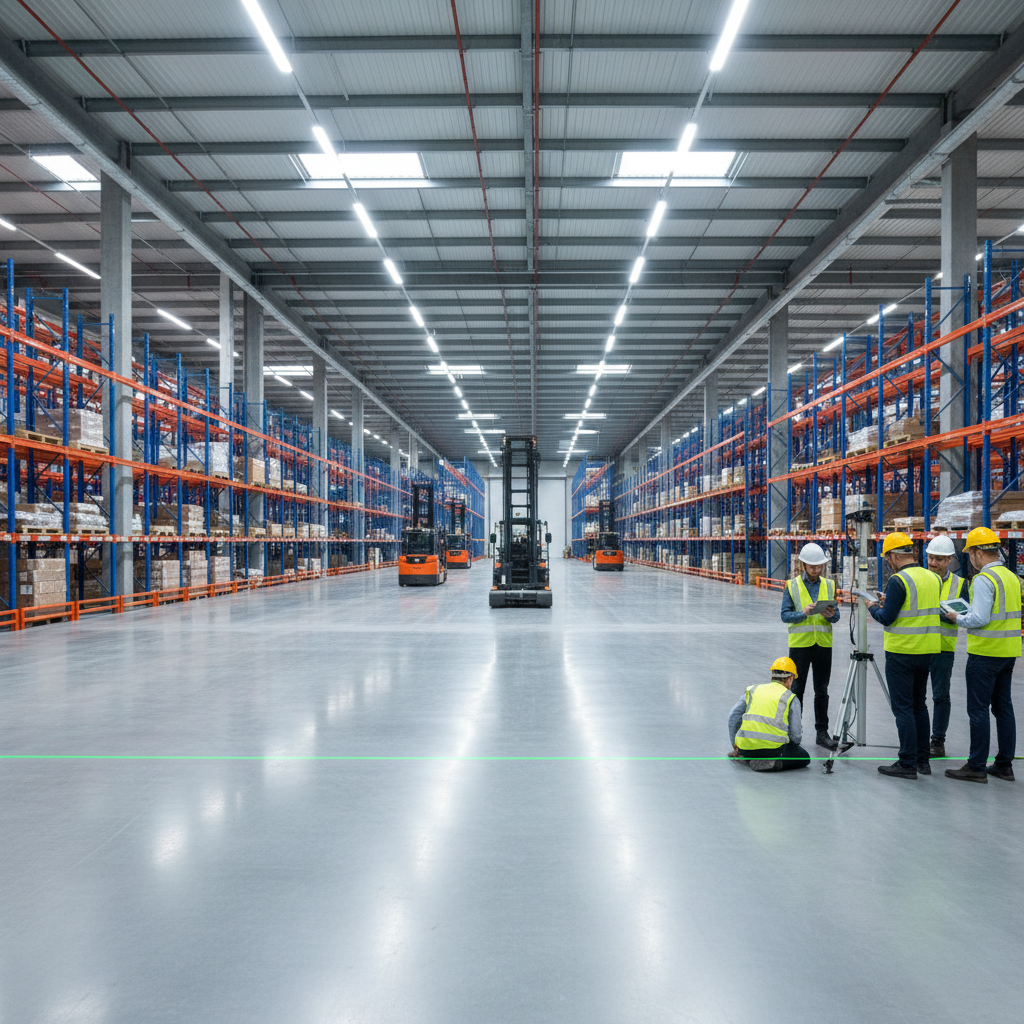
For Very Narrow Aisle (VNA) warehouses, where rack heights can exceed 15 meters, the industry standard is defined by TR34 (4th Edition) or ASTM E1155. Specifically, the FM2 (Free Movement) and Category 1 (Defined Movement) classifications are the benchmarks for high-performance logistics.
The Science of VNA Operations and FM2 Classifications
When a forklift operates at a height of 15 meters, a tiny deviation of only 2mm at the floor level can lead to a sway of several centimeters at the top of the mast. This "static lean" creates significant safety risks and operational bottlenecks:
- Impact on Forklift Speed: If a floor is uneven, drivers must slow down to prevent the vehicle from swaying or hitting the racking.
- Equipment Wear and Tear: Constant vibration from uneven joints and wavy surfaces leads to premature failure of tires, bearings, and electronic sensors on expensive material handling equipment (MHE).
- Operator Fatigue: Smooth floors reduce the physical strain on operators, leading to fewer errors and higher productivity over an 8-hour shift.
The Superflat Advantage
By achieving FM1 or FM2 classifications using advanced Laser-Screed technology, Osis Group enables warehouses to operate at maximum design speed. In a VNA environment, a "Superflat" floor allows for the installation of wire guidance systems, which automate steering and allow the operator to focus entirely on picking and placing pallets.
The Role of Laser-Screed Technology
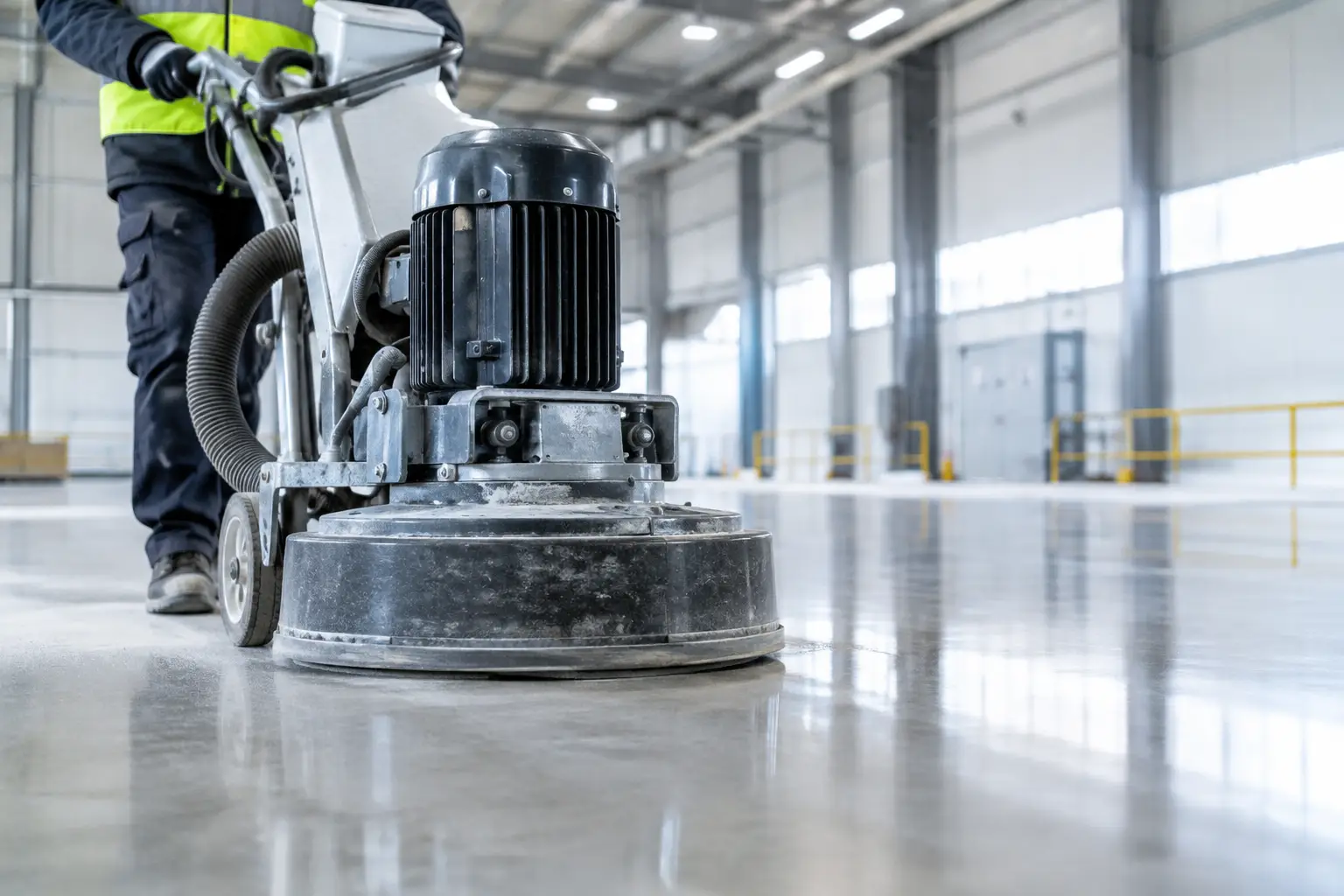
Traditional manual floor laying methods are insufficient for modern industrial requirements. Osis Group utilizes high-precision Laser-Screed machinery to achieve superior results.
How it works: The equipment uses a 360-degree laser transmitter to establish a constant reference point across the entire floor area. The screed head levels, vibrates, and finishes the concrete in a single pass.
- Accuracy: Achieves tolerances far beyond manual capabilities.
- Speed: Large areas (up to 2,000 m²) can be poured and finished in a single day, reducing the number of construction joints.
- Consistency: Ensures uniform density and strength throughout the slab.
Joint Design: The Achilles’ Heel of Industrial Floors
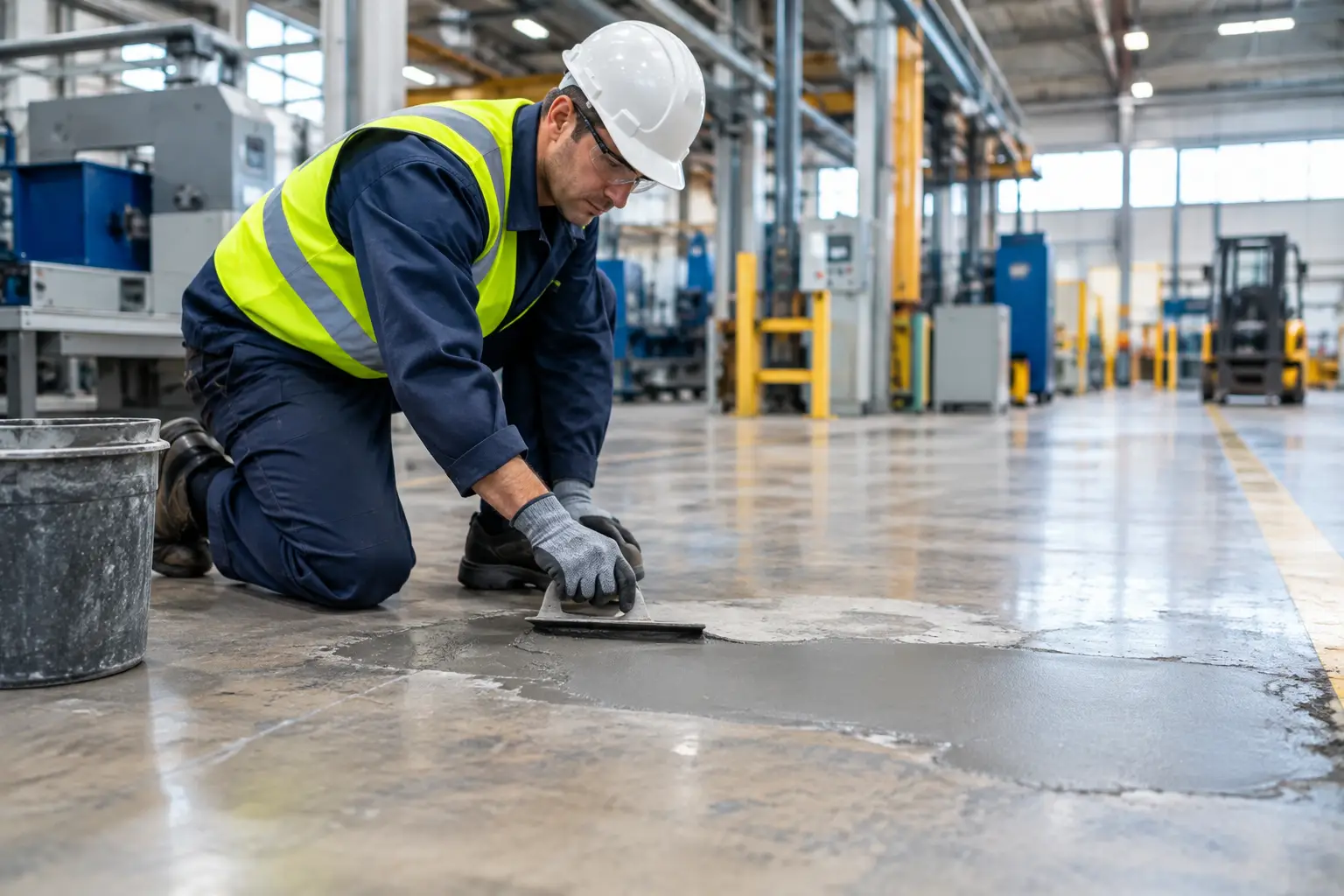
A floor is only as good as its joints. In heavy-duty environments like airport hangars or cargo terminals in the UAE and Qatar, the joints are the most vulnerable points.
Osis Group specializes in armored joints and joint stabilization. By using "Large Area Pour" techniques with steel fiber reinforcement (SFRC), we minimize the total number of joints. When joints are necessary, we utilize high-modulus epoxy sealants and plate dowels to ensure smooth load transfer, preventing "stepping" or "curling" that can damage forklift wheels.
The Economic Impact: ROI of High-Performance Floors
While a Superflat floor requires a higher initial investment, the Return on Investment (ROI) is realized rapidly through:
- Increased Throughput: Faster travel speeds mean more pallet moves per hour.
- Reduced Maintenance: Lower costs for MHE repairs and floor joint maintenance.
- Future-Proofing: A high-spec floor is ready for future automation, including AGVs (Automated Guided Vehicles) and AMRs (Autonomous Mobile Robots), which require high precision to navigate.
Conclusion
In the competitive landscape of the Middle East and Mediterranean logistics sectors, "good enough" flooring is a liability. Whether you are developing a cold storage facility in Riyadh or a world-class cargo terminal in Doha, the floor remains the foundation of your operational velocity.
At Osis Group, we combine global standards (TR34, ACI 360) with local expertise to deliver floors that do more than just hold weight—they drive performance.
Contact Osis Group today to discuss your next high-performance flooring project and learn more about our Laser-Screed and VNA flooring solutions.