A slab can be structurally sound and still fail the operating requirements of the facility above it. High points disrupt lift truck travel. Depressions collect water and contaminants. Uneven transitions damage wheels, create trip hazards, and compromise rack aisle performance. The best slab leveling options depend on the depth and extent of the defect, the required floor tolerance, the traffic profile, and how much downtime the operation can accept.
For industrial facilities, “leveling” is not a generic concrete repair task. It is a performance decision. The right approach must support the equipment, cleaning regime, loading conditions, and service life expected from the floor.
Start With the Cause, Not the Surface
Before selecting a repair method, determine why the slab is out of tolerance. A floor may have localized high spots from original placement, broad low areas from settlement, deteriorated patches from traffic, or joint-edge damage that creates abrupt elevation changes. These conditions can look similar from the surface while requiring very different corrective work.
A proper assessment considers slab elevation, flatness, levelness, joint condition, cracking, moisture conditions, surface strength, and the presence of coatings or contaminants. In a distribution center with very narrow aisle trucks, the required measurement and tolerance criteria may be far more demanding than those for a general warehouse. A floor that appears acceptable to foot traffic may be unsuitable for wire-guided or VNA equipment.
The distinction between flatness and levelness matters. Flatness describes short-distance surface variation. Levelness describes changes in elevation over longer distances. Precision grinding can improve local flatness, but it cannot correct a broad slab settlement issue on its own. An overlay can restore a profile, but it will not resolve active slab movement without addressing the underlying condition.
Best Slab Leveling Options by Condition
Precision Concrete Grinding
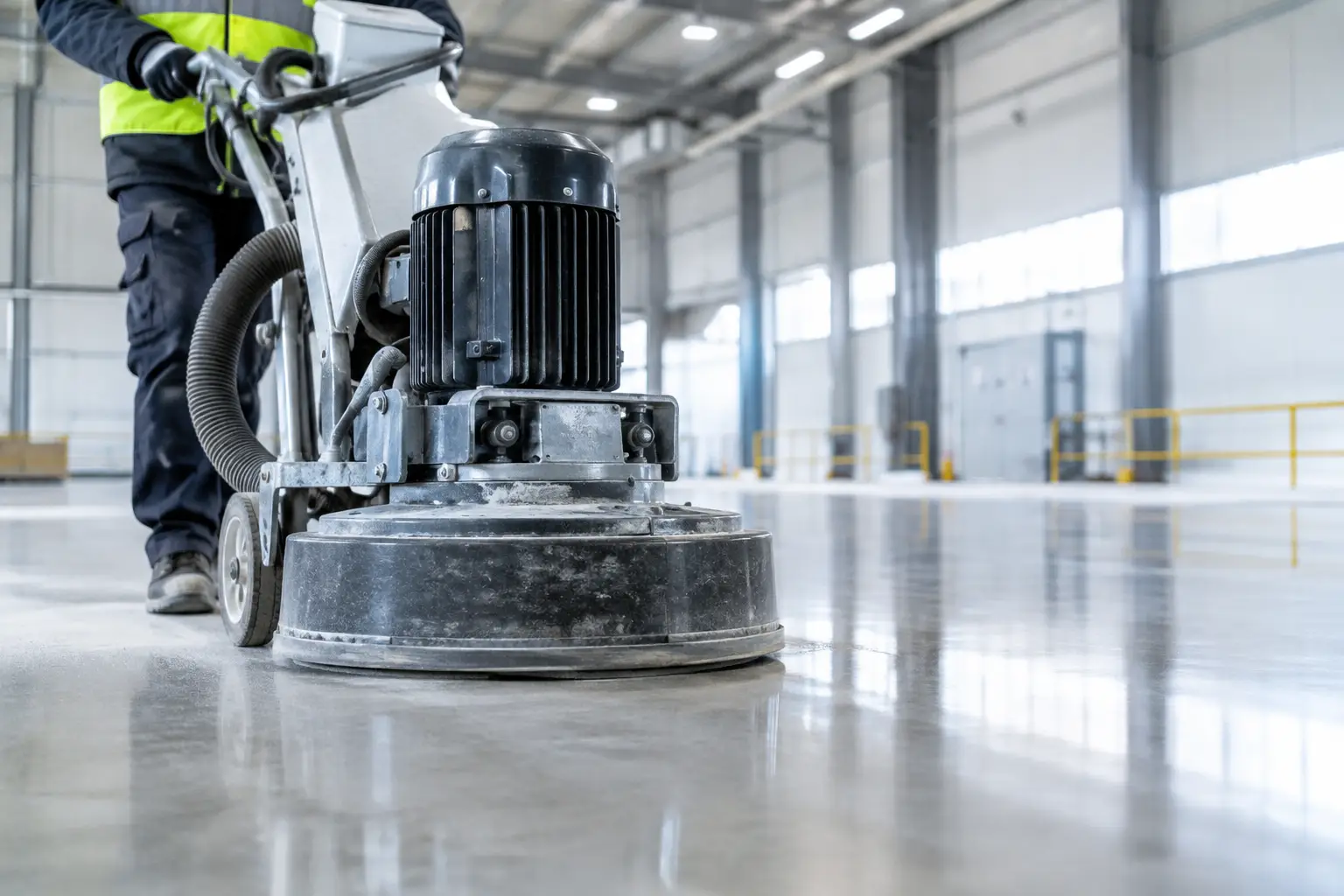
Grinding is often the most controlled solution for isolated high spots, slab curl, rough transitions, and localized flatness defects. Diamond tooling removes concrete in measured increments, allowing the contractor to bring specific areas into tolerance without adding material to the entire floor.
This method is especially effective where equipment performance depends on smooth, predictable travel. In VNA aisles, targeted grinding can correct wheel-path irregularities and improve the running surface for turret trucks. It is also a practical choice when finished floor elevations cannot increase because of doors, drains, equipment bases, or adjacent slabs.
Grinding has limits. It removes material, so it is not the answer for significant low areas. Excessive removal can expose aggregate, reduce cover over reinforcement, or weaken a thin slab section. The work should be based on verified elevation data and performed with a plan for dust control, edge transitions, and final surface durability.
Self-Leveling Underlayments and Toppings
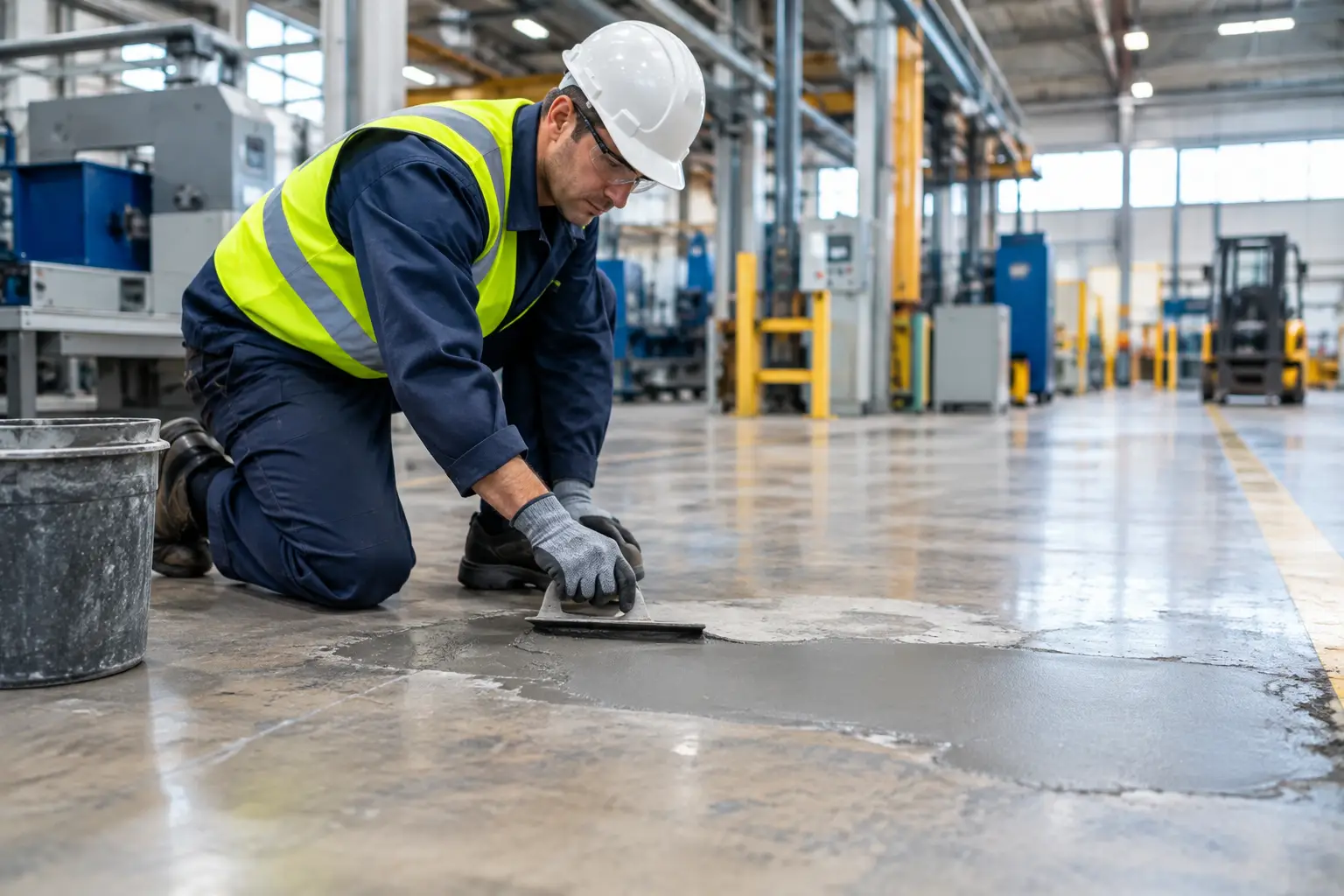
Cementitious self-leveling materials are designed to flow into shallow depressions and create a more uniform finished profile. They are useful for correcting broad but relatively shallow low areas, smoothing substrates before a resinous system, and restoring a floor where grinding alone would require too much concrete removal.
In industrial applications, material selection is critical. A light-duty underlayment intended for carpet or tile installation is not a warehouse floor solution. High-performance toppings must be engineered for the anticipated wheel loads, impact, thermal exposure, abrasion, and cleaning practices. Surface preparation is equally important. The existing concrete must have the required profile, soundness, and cleanliness to achieve dependable bond.
Self-leveling materials can be efficient, but they introduce cure time and may require protection before traffic resumes. They also change finished elevation. That can affect thresholds, drains, racking interfaces, and transitions to surrounding areas. For facilities operating around the clock, phasing and return-to-service planning should be established before installation begins.
Bonded Concrete Overlays
A bonded concrete overlay is appropriate when the slab has widespread surface deterioration, larger elevation variation, or a need for a renewed wearing surface. Unlike thin self-leveling applications, an overlay can provide greater thickness and durability when designed and installed correctly.
This option is often considered during a floor upgrade, especially where the existing slab no longer delivers the abrasion resistance, profile, or serviceability required for industrial traffic. It can be placed to improve drainage, correct broad low areas, and prepare the facility for a more demanding operational use.
The trade-off is project complexity. Bonded overlays require thorough substrate preparation, careful thickness design, joint planning, and curing control. If the existing slab contains active cracks, moisture-related issues, or unsound concrete, those conditions must be addressed first. A well-installed overlay can extend floor life substantially. A poorly bonded overlay can become another layer of failure.
Full-Depth Removal and Replacement
When the slab is severely deteriorated, structurally compromised, or outside tolerance beyond practical correction, removal and replacement may be the right investment. This is the most disruptive option, but it can be the most economical over the lifecycle when repeated patching, grinding, and overlay work will not restore the required performance.
Replacement is commonly justified in high-load zones, heavily damaged dock approaches, failed equipment pads, and critical travel lanes where slab movement or deep deterioration continues to create operational risk. It also provides the opportunity to rebuild the floor for the actual use of the space rather than accepting the limitations of the original construction.
For mission-critical operations, replacement must be planned around access, staging, curing, traffic rerouting, and equipment shutdowns. The value of this option is not simply new concrete. It is the ability to establish the correct subgrade support, reinforcement, joint layout, tolerance target, and finished surface from the start.
Slab Lifting for Settlement Conditions
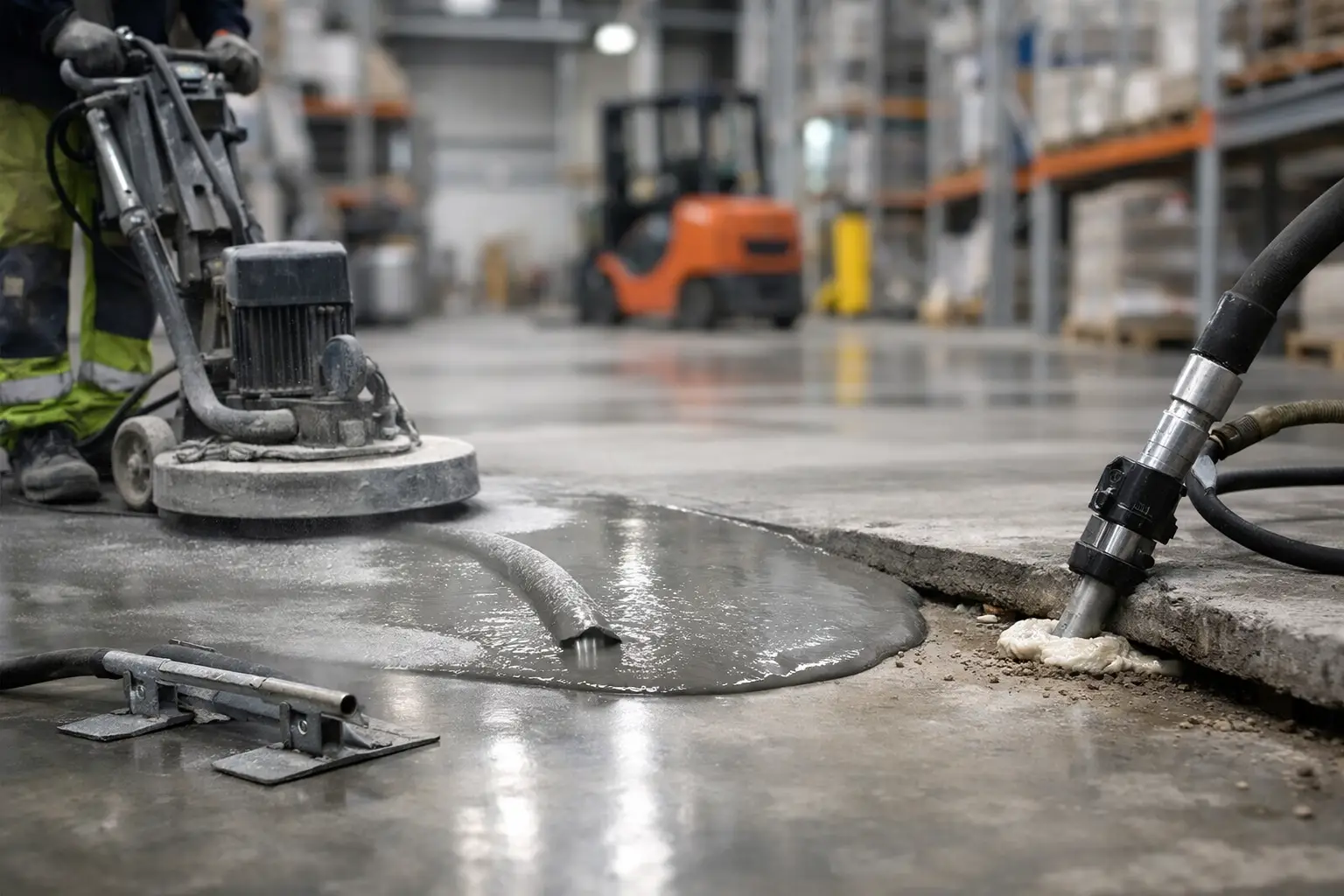
Where a slab has settled but remains largely intact, slab lifting may be considered before overlay or replacement. Depending on the site condition, injectable materials or grout-based methods can raise depressed concrete sections and reduce abrupt transitions.
This approach is most relevant when voids, soil movement, or localized settlement are driving the elevation issue. It can limit demolition and preserve the existing slab. However, lifting does not automatically produce the precision required for every industrial floor. Final grinding, joint repair, or surface correction may still be necessary.
The underlying cause must be understood. Raising a slab without addressing drainage failures, subgrade washout, or continuing soil movement can create only a temporary improvement. For high-tolerance facilities, elevation verification after lifting is essential.
Joints Often Control Floor Performance
Many slab leveling complaints are actually joint problems. Joint edges can curl, spall, settle, or break down under repeated forklift traffic. The resulting impact is felt by equipment operators long before the defect appears severe in a visual inspection.
Joint repair may involve removing failed concrete at the arris, rebuilding the edge with a high-strength repair material, and installing an appropriate filler to support traffic. Where adjacent slab panels have different elevations, the repair should restore a smooth transition while preserving the joint’s movement function.
Ignoring joints during a leveling project can undermine the result. A newly ground or overlaid floor will not perform as intended if lift trucks continue to strike damaged joint edges throughout the travel path.
Selecting the Right Option for VNA and High-Traffic Facilities
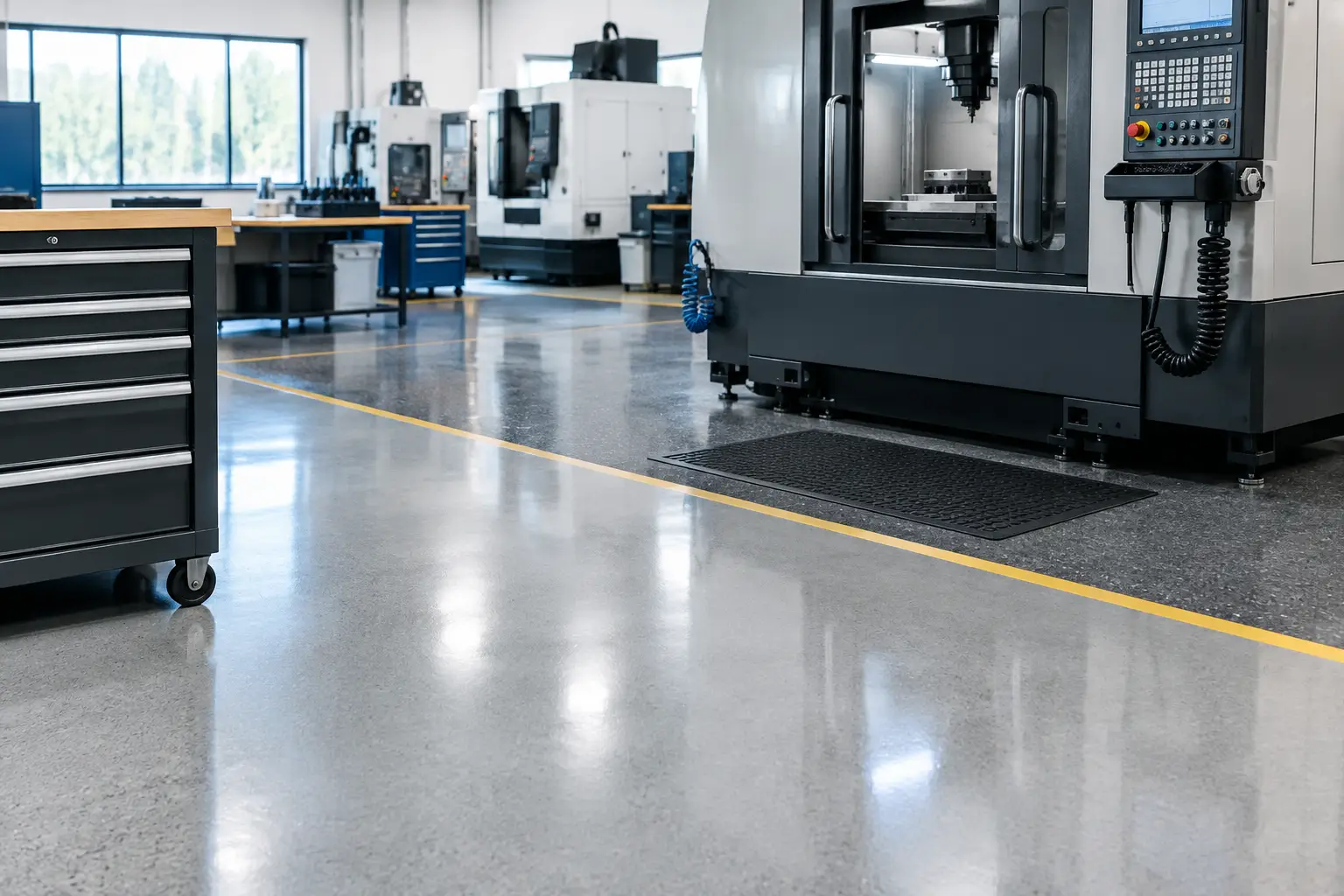
The best slab leveling options for a conventional warehouse are not automatically suitable for a superflat floor. VNA operations require a more disciplined approach because minor deviations can affect mast movement, truck stability, guidance reliability, and rack aisle productivity.
The work should begin with measurements tied to the actual wheel paths and equipment requirements. Corrective grinding, localized fill, and joint repairs should be sequenced against defined tolerance targets, not visual judgment. Final verification should confirm that the repaired aisle meets the required operational standard.
High-traffic facilities also need to consider surface durability after leveling. A repair that achieves the correct profile but wears rapidly under hard wheels is not a complete solution. The finished system must withstand abrasion, point loading, turning forces, and the facility’s maintenance practices.
Plan for Uptime, Not Just Installation
Leveling work should be designed around how the facility operates. A repair crew needs access, but operations need shipping lanes, production flow, and safe pedestrian routes. The best project plans divide work into manageable phases, isolate dust, coordinate equipment movement, and establish clear return-to-service milestones.
Material cure times, surface preparation noise, moisture conditions, and traffic restrictions all affect schedule. Early planning avoids the common mistake of choosing a technically sound method that cannot be executed within the available outage window.
Osis Group approaches slab correction as part of the floor’s total operating performance. The objective is a durable, measurable result that supports safe traffic, equipment reliability, and long-term facility value.
The right leveling method is the one that corrects the actual defect without creating a new limitation. Measure the floor, define the operating tolerance, and select a system built for the loads and uptime your facility cannot afford to lose.