In the rapidly evolving landscape of e-commerce and logistics, the AutoStore™ system has emerged as the gold standard for high-density automated storage and retrieval systems (ASRS). Unlike traditional racking, AutoStore utilizes a cube-based grid where robots travel atop a structure to retrieve bins.
For these systems to operate with peak efficiency and zero downtime, the underlying concrete floor is the most critical infrastructure component. At Osis Group, we specialize in the high-precision engineering required to support these robotic grids across Qatar, the UAE, Greece, and KSA.
Why AutoStore Floors Differ from Standard Warehousing
In a standard Very Narrow Aisle (VNA) warehouse, floor flatness is primarily concerned with the wheel paths of the trucks. However, an AutoStore system imposes unique demands on the slab:
- Uniform Point Loading: The grid structure exerts significant point loads at every leg location. These loads are cumulative; once the bins are fully loaded, the pressure on the slab is immense.
- Deflection Limits: Even a slight deflection in the slab can cause the aluminum grid above to twist or become unlevel, leading to robot stalls or "grid-locking."
- Long-term Stability: The floor must resist settlement over decades, as recalibrating a massive robotic grid is a costly and complex operation.
Technical Specifications: Meeting the Standard
When Osis Group designs or consults on an AutoStore floor, we look at several key metrics defined by international standards such as TR34 (4th Edition) and ACI 360R-10.
1. Flatness and Levelness (FM1 vs. Spec-Built)
While many traditional warehouses settle for FM2 (Special) classifications, AutoStore installations typically require an even higher degree of precision.
- Surface Regularity: We often aim for FM1 or better to ensure the baseplates of the grid are perfectly seated.
- Levelness: The absolute levelness (the 'datum') is often more critical than localized flatness. If the floor slopes across 50 meters, the top of the grid (which may be 5-7 meters high) will be significantly out of alignment.
2. Concrete Strength and Reinforcement
We typically utilize Grade C35/45 or C40/50 concrete. To manage the high point loads and eliminate the risks associated with traditional mesh (such as displacement during pouring), Osis Group advocates for Steel Fiber Reinforced Concrete (SFRC) or macro-synthetic fibers combined with strategic rebar in high-stress zones.
3. Load Bearing Capacity
AutoStore floors must often support static loads exceeding 60kN/m² to 100kN/m², depending on the height of the grid. Our engineering team conducts rigorous plate bearing tests and sub-base analysis to ensure the ground modulus (k-value) is sufficient to prevent differential settlement.
Construction Methodology: The Osis Group Approach
Achieving an AutoStore-ready floor requires a shift from "volume-driven" pouring to "precision-driven" execution.
Phase 1: Sub-Base Preparation
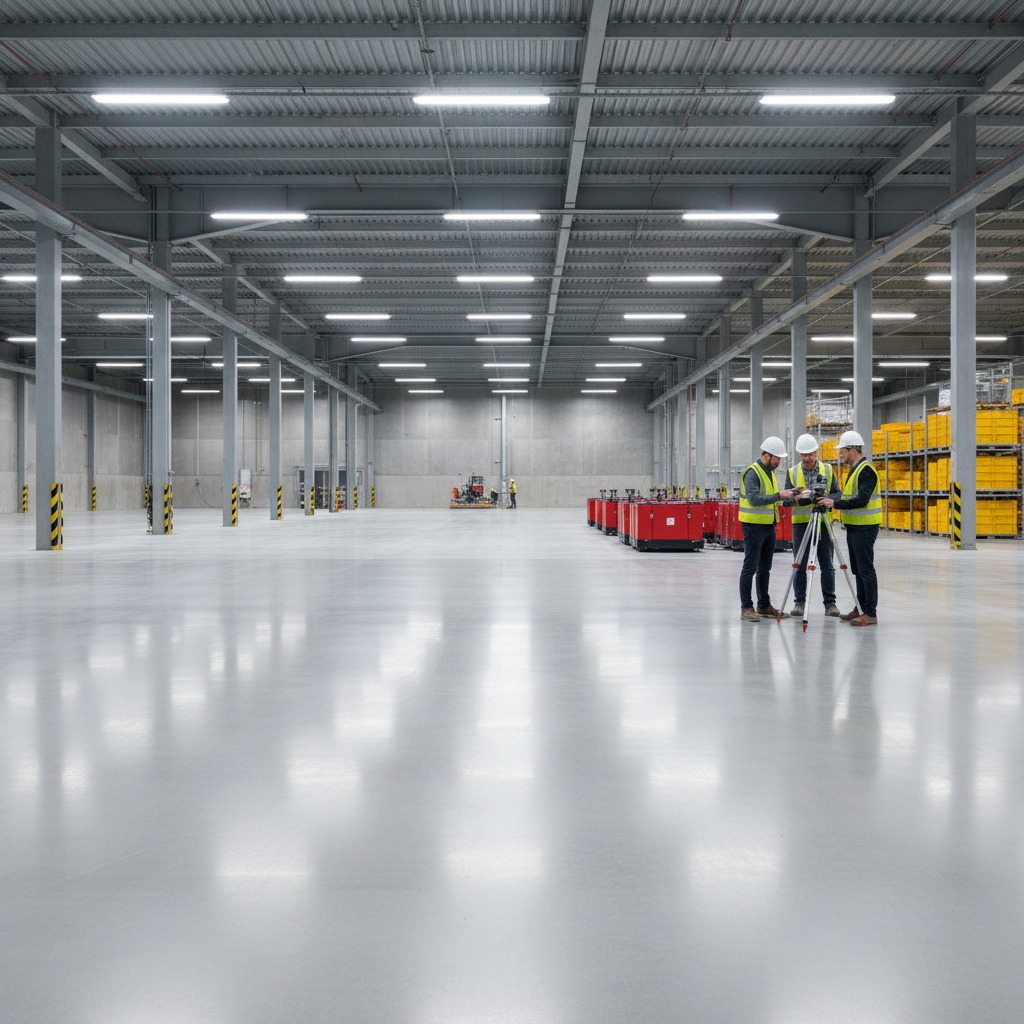
Precision starts from the ground up. We utilize laser-guided grading equipment to ensure the sub-base is level within +/- 5mm. A perfectly compacted sub-grade is the only way to guarantee the concrete slab maintains its integrity under the weight of several thousand storage bins.
Phase 2: Laser Screed Technology
Osis Group employs advanced Large Area Laser Screeds. This technology allows us to pour large sections of the floor without the need for traditional formwork, reducing the number of construction joints. Fewer joints mean fewer "weak spots" and a smoother surface for the grid installation.
Phase 3: High-Tolerance Finishing
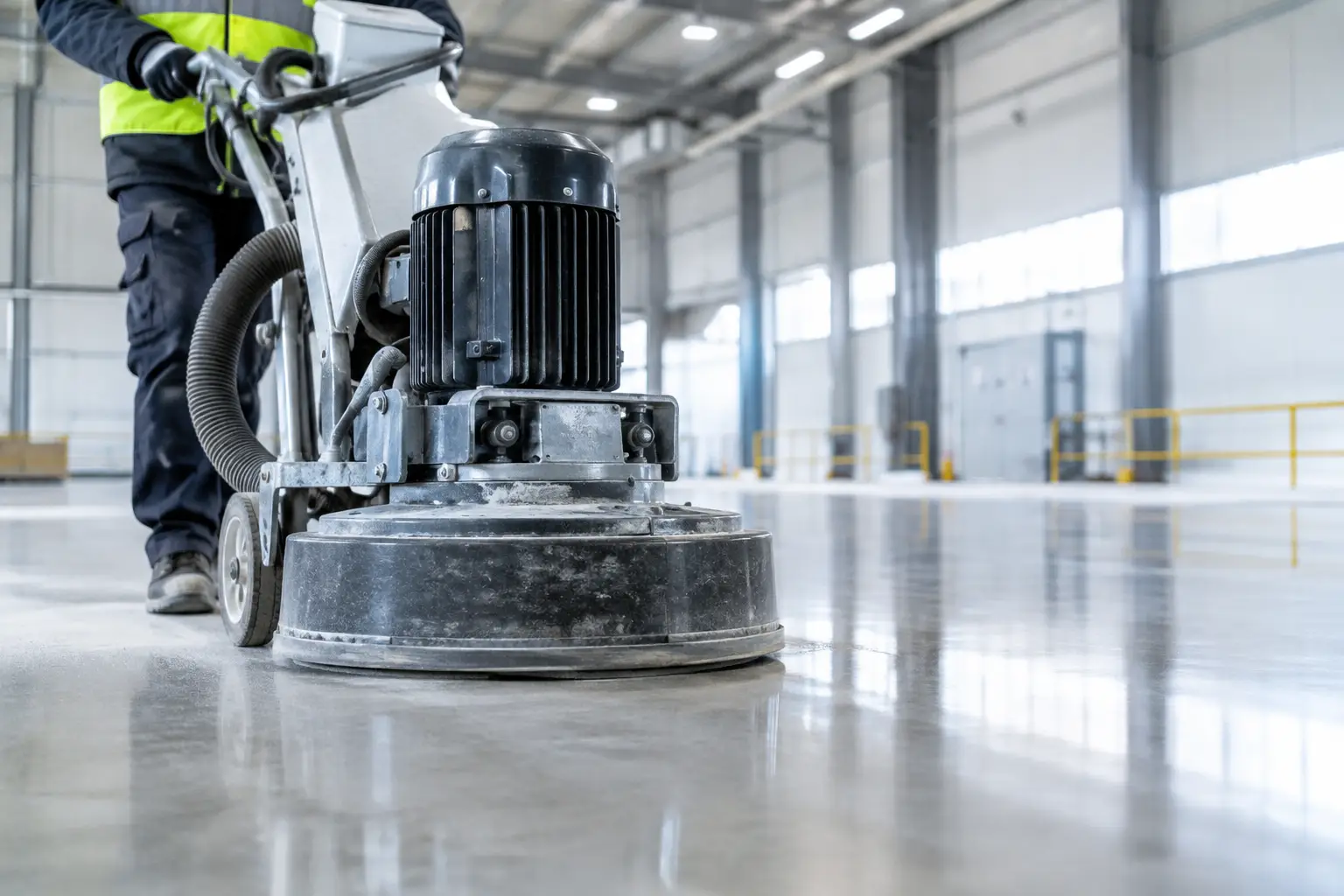
Once the concrete is placed, our finishing teams use specialized ride-on power trowels. We monitor the floor’s "Floorness" in real-time. For AutoStore projects, we often implement "Superflat" grinding techniques if the initial pour does not meet the extreme tolerances required for the aluminum base plates.
Phase 4: Joint Design and Armored Joints
Joints are the most common point of failure in industrial floors. In an AutoStore environment, we utilize Armored Construction Joints (such as specialized steel dividers) that allow for shrinkage without creating a gap or a "bump" that could tilt a grid leg.
The Role of Dry-Shake Hardeners and Dustproofing
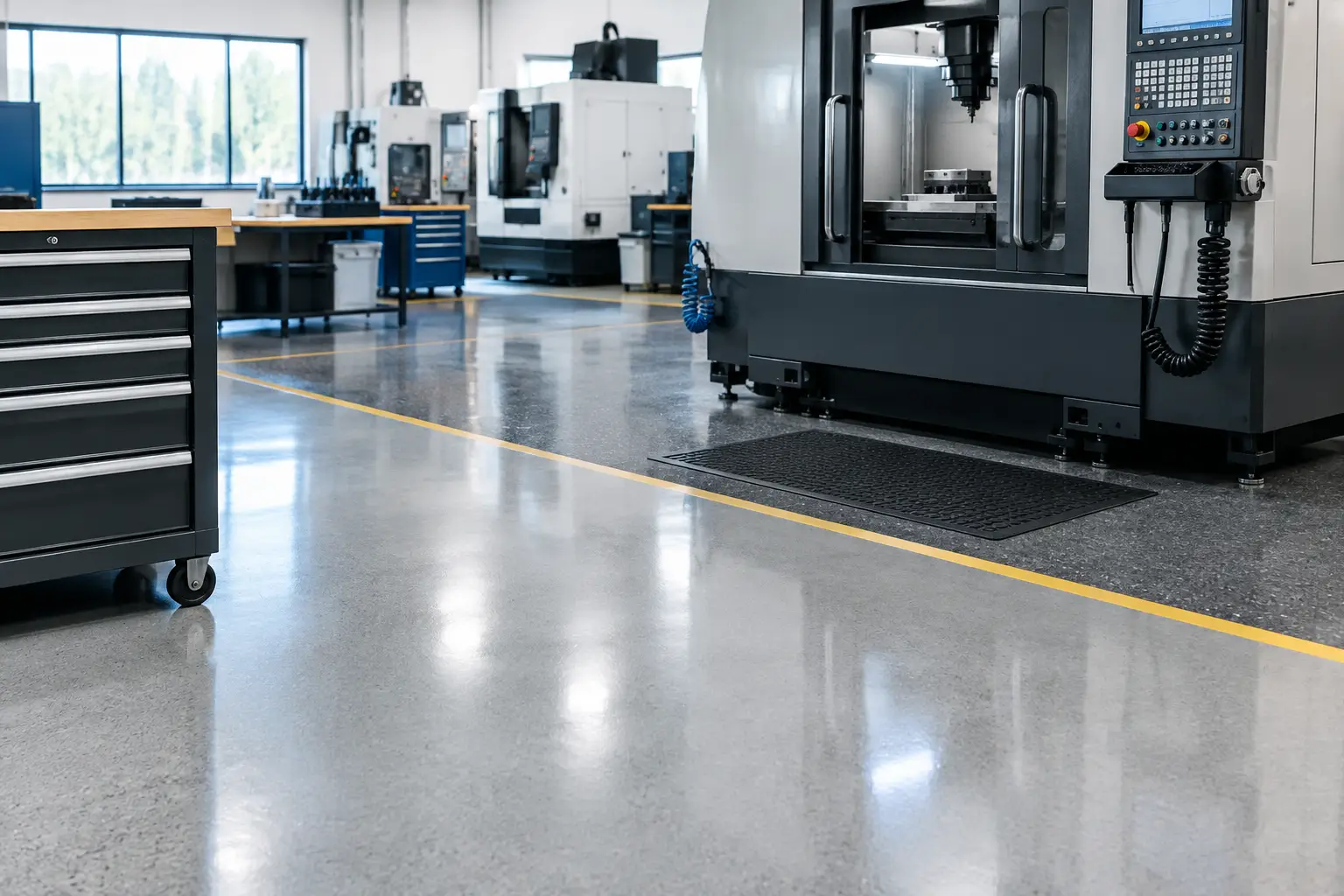
Robotic sensors are highly sensitive to dust. Concrete dusting can interfere with robot optics and clog mechanical components. Osis Group applies dry-shake mineral hardeners during the power-troweling process to increase abrasion resistance. Following the cure, we apply a Lithium-based densifier and sealer, which chemically reacts with the concrete to create a dust-proof, سهل-to-clean surface.
Upgrading Existing Floors for AutoStore
Many of our clients in the Middle East and Europe are looking to retrofit existing warehouses with AutoStore systems. In these cases, Osis Group provides:
- GPR Scanning: To locate existing reinforcement and voids.
- Laser Surveys: To map the current flatness and levelness.
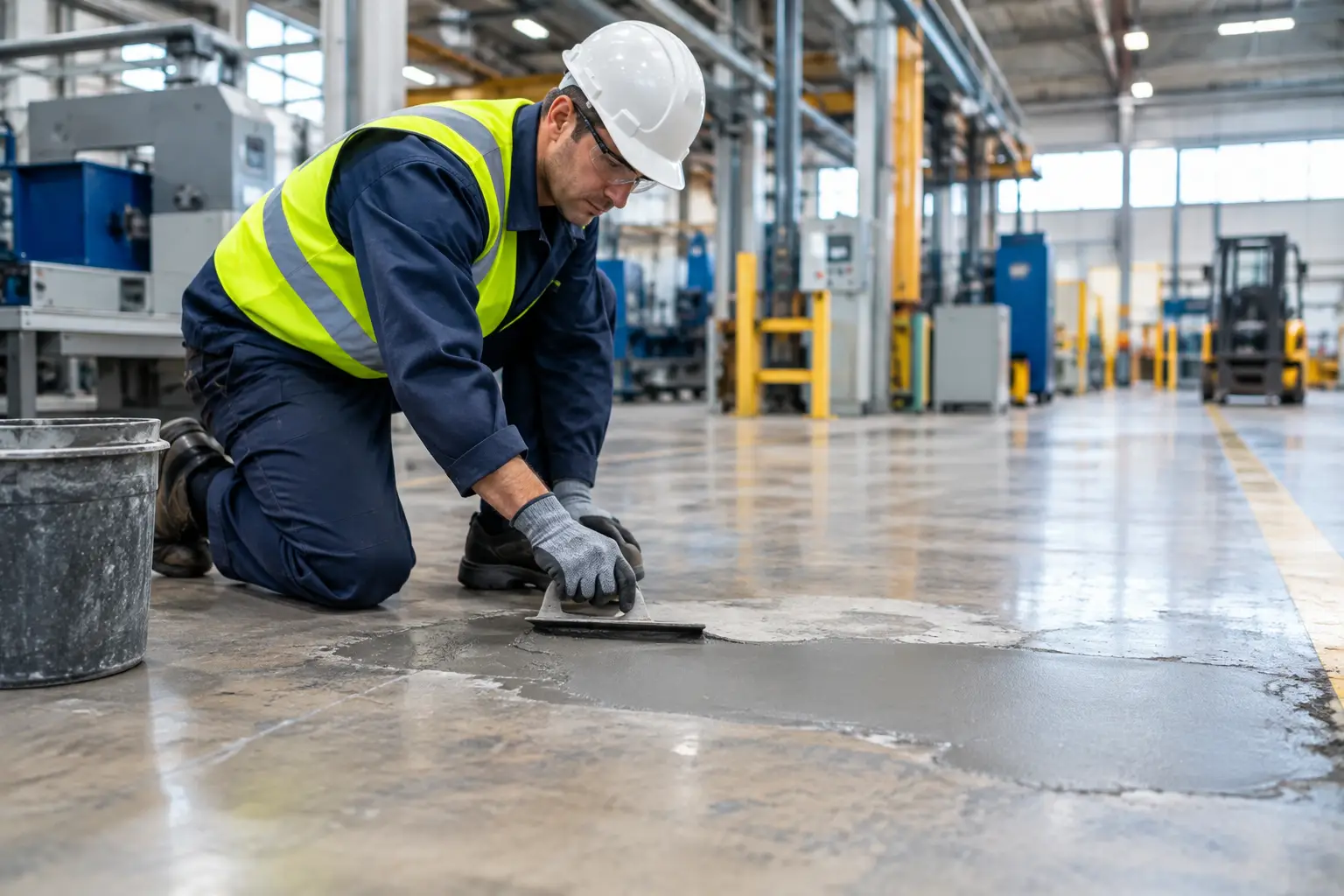
- Floor Topping/Grinding: Using high-strength self-leveling compounds or precision grinding to bring an old slab up to AutoStore specifications.
Conclusion
An AutoStore system is a significant investment in a company's future. Protecting that investment starts with the floor. By adhering to TR34 standards and utilizing advanced construction methodologies, Osis Group ensures that your robotic warehouse operates at peak performance from day one.
Are you planning an automated warehouse in Qatar, KSA, or the UAE? Contact Osis Group today for a technical consultation on your flooring requirements.